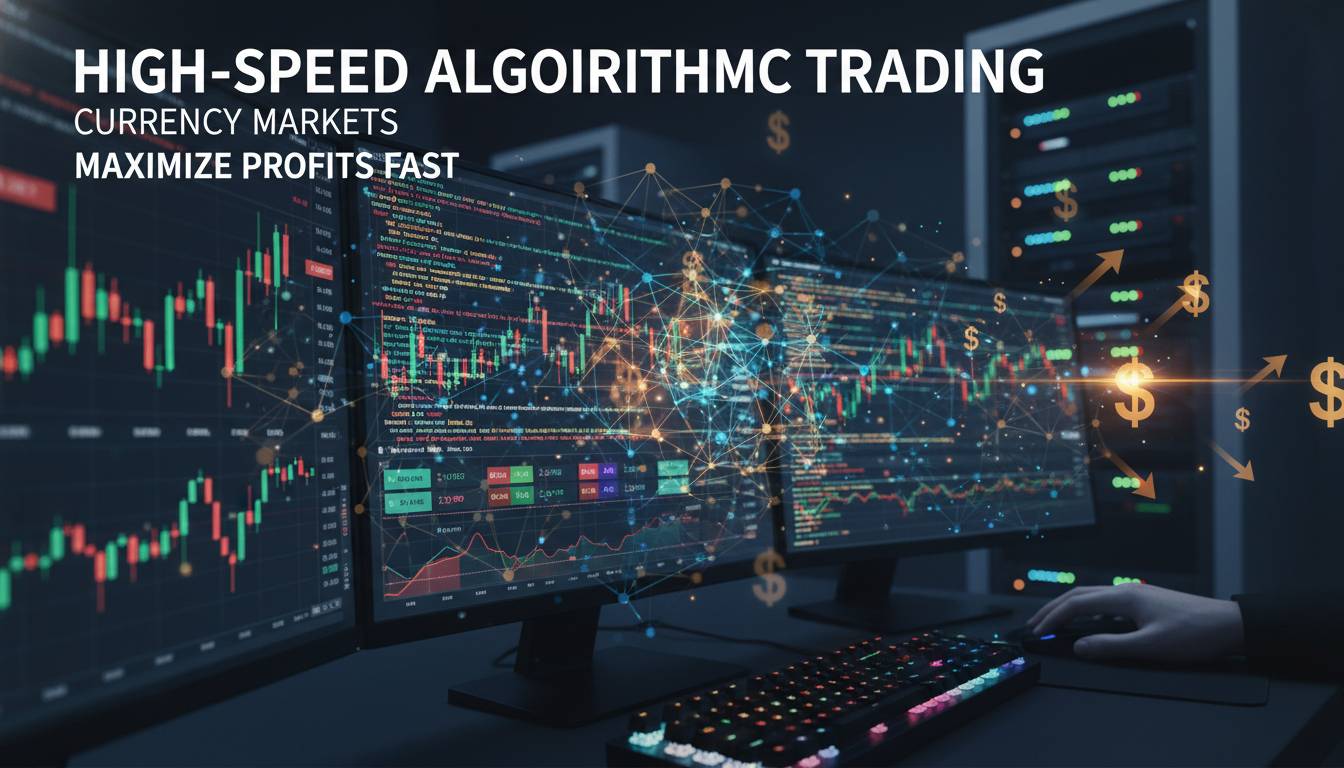


High-speed algorithmic trading in currency markets is reshaping how the U.S. foreign exchange (FX) landscape operates. With AI-driven systems executing trades in microseconds, the market sees both heightened efficiency and elevated risks. This article explores the latest developments, regulatory shifts, and implications for traders and institutions.
Rapid Expansion of High-Speed Algorithmic Trading
High-speed algorithmic trading—also known as high-frequency trading (HFT)—now dominates FX markets. As of 2023, approximately 85% of FX trading is executed via algorithmic systems, reflecting a broader trend toward automation in financial markets . These systems operate at ultra-low latencies—often under 500 microseconds—enabling firms to capitalize on fleeting price discrepancies .
In 2025 and early 2026, this trend accelerated. Exchanges in the U.S. and globally upgraded their matching engines and expanded colocation services, further reducing execution times and boosting HFT activity . AI-driven execution systems are now mainstream, dynamically adjusting parameters based on real-time order book data, liquidity, and volatility .
Regulatory Response and Market Integrity
As high-speed algorithmic trading proliferates, regulators are stepping up oversight. In October 2025, the U.S. Commodity Futures Trading Commission (CFTC) proposed the Automated Trading Risk and Transparency Act. This legislation mandates registration of algorithmic models, implementation of kill switches, real-time risk dashboards, and audit trails for AI-driven trading systems .
The CFTC’s September 2025 report revealed that HFT accounts for 43% of FX trading volume, with average latencies as low as 2.1 milliseconds for major players like Citadel and Jump Trading . The report also flagged a 34% increase in abnormal quote fluctuations—over 0.5%—during U.S. trading hours, highlighting the potential for AI-induced market disruptions .
Technological Innovations and AI Integration
AI is redefining algorithmic trading strategies. Hybrid models combining technical indicators, sentiment analysis, and machine learning are delivering superior performance in FX markets. For example, a 2025 study on EUR/USD trading systems demonstrated enhanced predictive accuracy using a blend of macroeconomic and technical inputs .
Another innovation is anomaly detection using deep learning. A Transformer-based model achieved 93% accuracy and an F1 score of 0.91 in identifying abnormal behaviors in high-frequency EUR/USD data, offering valuable support for market surveillance .
Emerging frameworks like QuantAgent—multi-agent LLM systems tailored for HFT—are also gaining traction. These systems decompose trading decisions into specialized agents (Indicator, Pattern, Trend, Risk), enabling real-time, traceable decision-making in high-speed environments .
Impact on Market Participants
Institutional Players
Large firms benefit from economies of scale in AI and infrastructure. The IMF reports that algorithmic trading now accounts for about 70% of U.S. equity trading and over half of futures trading, with AI enabling rapid processing of high-frequency and unstructured data . This concentration favors firms with advanced technology and deep resources.
Retail Traders
Retail access to algorithmic FX trading is expanding. Platforms like MetaTrader 5, cloud-based bots, and AI signal providers have democratized automation. A 2025 survey found that 45% of retail FX traders now use some form of automation, up from 20% in 2020 . However, many prop trading firms prohibit HFT strategies under five-second intervals and latency arbitrage, enforcing strict risk controls .
Market Stability and Risks
While HFT enhances liquidity and tightens spreads, it also introduces systemic risks. Flash crashes and errant AI behavior can trigger rapid market dislocations. The CFTC’s data on abnormal quote surges underscores this vulnerability . Deep learning models for anomaly detection offer a partial solution, but the risk of algorithmic herding and unintended feedback loops remains.
Future Outlook and Strategic Implications
The trajectory of high-speed algorithmic trading in currency markets points toward deeper AI integration, faster infrastructure, and evolving regulation.
- AI will increasingly drive execution, risk management, and surveillance.
- Exchanges will continue to reduce latency through upgraded matching engines and expanded colocation.
- Regulatory frameworks like the Automated Trading Risk and Transparency Act will shape compliance and transparency.
- Retail traders will gain access to sophisticated tools, though risk management and oversight will be critical.
- Market stability will depend on robust anomaly detection, circuit breakers, and responsible AI deployment.
Conclusion
High-speed algorithmic trading in currency markets is transforming the FX landscape. AI-driven systems now dominate trading volumes, offering speed and efficiency while raising new challenges for market integrity. Regulatory initiatives, technological innovation, and evolving participation models are shaping a complex, dynamic environment. As the U.S. moves into 2026, the balance between innovation and oversight will determine whether high-speed algorithmic trading delivers sustainable benefits for all stakeholders.
Frequently Asked Questions
What is high-speed algorithmic trading in currency markets?
High-speed algorithmic trading—also known as high-frequency trading (HFT)—uses automated systems to execute FX trades in microseconds, leveraging AI, low-latency infrastructure, and real-time data analysis.
How prevalent is algorithmic trading in FX?
As of 2023, approximately 85% of FX trading is algorithmic. In the U.S., algorithmic trading accounts for around 70% of equity trading and over half of futures trading .
What regulations are being introduced?
The CFTC’s proposed Automated Trading Risk and Transparency Act requires algorithm registration, kill switches, risk dashboards, and audit logs to enhance transparency and control .
How is AI being used in FX algorithmic trading?
AI enhances execution through real-time parameter adjustment, hybrid predictive models, anomaly detection, and multi-agent frameworks like QuantAgent .
Can retail traders participate in high-speed algorithmic trading?
Yes. Retail traders increasingly use cloud-based platforms, bots, and AI tools. However, many prop firms restrict ultra-fast strategies and enforce strict risk controls .
What are the risks of high-speed algorithmic trading?
Risks include flash crashes, AI-driven market disruptions, systemic volatility, and concentration of power among large firms. Anomaly detection and regulation are critical to mitigating these risks.