News
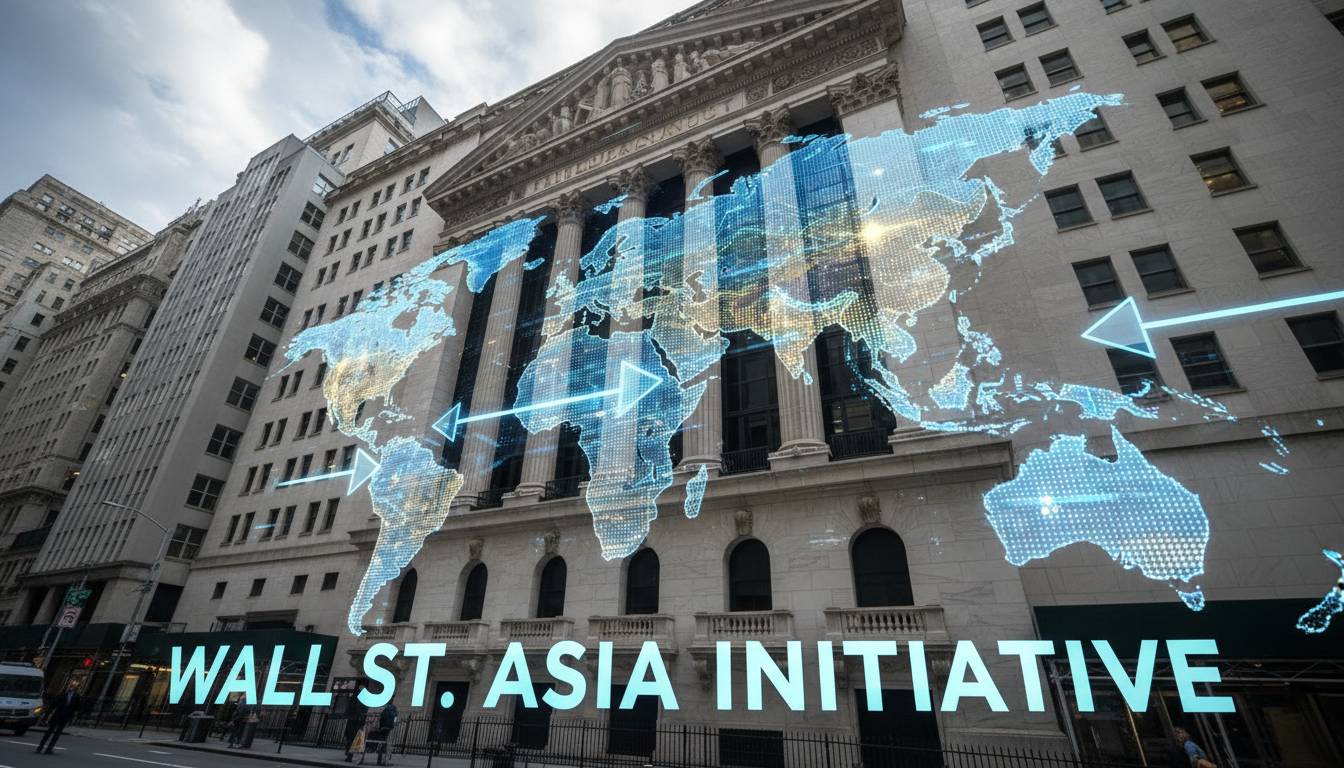
Wall Street Targets Asia FX Dominance With New Won Stablecoin
Explore how Wall Street targets Asia FX dominance with a new won stablecoin, reshaping regional markets and cross-border finance. Read the full analysis.

South Korea’s push to permit won-denominated stablecoins through bank-led consortiums has turned a domestic policy debate into a broader contest over who controls Asia’s next digital foreign-exchange rails. As of January 6, 2026, the Financial Services Commission’s coordination plan points to majority bank ownership, while major financial groups, technology firms, and custody providers are already positioning for issuance, payments, remittances, and tokenized settlement.
💡
The core shift is regulatory, not speculative.
South Korea’s Financial Services Commission decided won stablecoins would begin with bank-led consortiums holding 50% plus one share, according to Seoul Economic Daily’s January 6, 2026 report citing the government’s coordination plan. That structure matters because it gives traditional finance the first legal foothold in a market still dominated by dollar stablecoins.
January 6 Rule Design Put 50%+1 Bank Control at the Center
The immediate story is not that a won stablecoin has fully launched nationwide. It is that South Korea’s policy architecture has moved closer to allowing one. According to Seoul Economic Daily, the Financial Services Commission decided that won-denominated stablecoin issuance would start with bank-led consortiums in which banks hold a majority stake of 50% plus one share. The same report says technology companies may still be recognized as the largest individual shareholder and lead operations inside that consortium model.
— Asia Stablecoin Alliance (@AsiaStablecoin) November 4, 2025
That distinction is important for U.S. and global readers because it shows how Asia’s digital-currency competition is being built: not as a pure crypto experiment, but as regulated financial infrastructure. The Bank of Korea has also backed a bank-led starting point. A January 27, 2026 report said Governor Lee reiterated support for allowing won stablecoin issuance while starting with bank-led institutions.
South Korea Won Stablecoin Framework: Verified Signals
| Item | Verified detail | Source date |
|---|---|---|
| Initial issuer model | Bank-led consortiums | Jan. 6, 2026 |
| Minimum bank control | 50% plus one share | Jan. 6, 2026 |
| Tech firm role | Can be largest individual shareholder | Jan. 6, 2026 |
| Central bank stance | Supports bank-led issuance first | Jan. 27, 2026 |
Source: Seoul Economic Daily; Bank of Korea-linked policy discussion | accessed March 24, 2026
If this works, it reshapes FX markets, cross-border settlements, and fintech across Asia. Japan could become the region's stablecoin hub.
— codeandstate (@codeandstate) October 21, 2025
Historically, South Korea has lacked an approved KRW stablecoin despite years of digital-asset activity. CoinGecko’s Asia stablecoin overview published in March 2026 said no KRW-pegged stablecoin had received regulatory approval as of February 2026. That means the current debate is less about scaling an existing token and more about deciding who gets to build the first regulated won-based settlement layer.
Why a Won Token Matters in a $300 Billion Dollar-Stablecoin Market
The strategic backdrop is the scale of dollar stablecoins. CoinGecko’s 2025 annual industry report said stablecoin market capitalization finished 2025 above $300 billion. CoinMarketCap’s March 1, 2026 historical snapshot showed USDT at roughly $183.66 billion in market capitalization and USDC at about $75.20 billion. In other words, the market South Korea is entering is already dominated by digital dollars, not local-currency tokens.
🌏 China Launches a Yuan-Pegged Stablecoin — in Kazakhstan
China has just taken a historic step toward the digital internationalization of the yuan.
In late September, a yuan-pegged stablecoin — called AxCNH — officially launched offshore in Kazakhstan.
It’s more than just… pic.twitter.com/ysNuRYSbsv— Crynet (@crynetio) October 5, 2025
That is why the phrase “FX dominance” is not just rhetorical. Dollar stablecoins already function as cross-border liquidity instruments across exchanges, OTC desks, remittance corridors, and decentralized finance. If a regulated won stablecoin gains traction, it could give Korean banks and payment firms a domestic-currency alternative for settlement, treasury movement, and potentially trade-linked transfers. Seoul Economic Daily reported on February 23, 2026 that BDACS and Com2uS Holdings signed an agreement to build won stablecoin infrastructure, with KRW1 positioned for payments, remittances, institutional treasury management, cross-border payments, and asset tokenization.
Won Stablecoin Timeline
Dec. 23, 2025: Kakao plans a consortium with banks and entertainment firms for a won stablecoin, according to Seoul Economic Daily.
Jan. 2, 2026: Hana Financial chairman says banks should proactively build the issuance, distribution, usage, and circulation ecosystem for won stablecoins.
Jan. 6, 2026: FSC coordination plan points to bank-led consortiums with 50% plus one share.
Jan. 25, 2026: Hana consortium expands beyond finance, with SK Telecom expected to join.
Feb. 23, 2026: BDACS and Com2uS Holdings announce won stablecoin infrastructure partnership.
By comparison, dollar stablecoins have a multi-year lead, deep exchange integration, and global network effects. That makes the won project defensive as much as expansionary. It is defensive because Korean institutions do not want domestic digital liquidity to default entirely to USDT and USDC. It is expansionary because a compliant KRW token could become a bridge between Korean banking, Asian payments, and tokenized assets.
Which Firms Are Building the First Korean Won Networks?
The competitive field is widening. Hana Financial has publicly argued for bank leadership. Seoul Economic Daily reported on January 25, 2026 that Hana’s consortium included regional financial groups and banks, with SK Telecom expected to join to broaden real-world use cases. KB Kookmin has also been active; a January 25 report said the bank had filed won-stablecoin trademark applications earlier and was expected to become a core pillar if bank-centered issuance proceeds.
Kakao is another major name. A December 23, 2025 report said Kakao planned to form a consortium with banks and entertainment firms as a first step toward authorization for a won stablecoin. That matters because Kakao Pay and Kakao’s broader platform reach could give any approved token immediate consumer and merchant distribution advantages. Kakao Pay separately reported 185.6 trillion won in annual gross merchandise value and 50.4 billion won in operating profit for 2025, according to Seoul Economic Daily on February 6, 2026, underscoring the scale of the payments ecosystem that could eventually connect to tokenized won rails.
Key Korean Players Positioning for Won Stablecoins
| Entity | Role | Verified development |
|---|---|---|
| FSC | Rulemaker | Bank-led consortium model under review |
| Bank of Korea | Supervisor/policy voice | Supports bank-led issuance first |
| Hana Financial | Consortium builder | Publicly urges ecosystem leadership |
| KB Kookmin | Bank participant | Trademark filings tied to won stablecoin plans |
| Kakao | Tech/payments participant | Consortium planning disclosed |
| BDACS / Com2uS | Infrastructure | KRW stablecoin infrastructure partnership |
Source: Seoul Economic Daily reports from Dec. 2025 to Feb. 2026 | accessed March 24, 2026
Separately, the Bank of Korea’s digital-currency work has not disappeared. Seoul Economic Daily reported on January 2, 2026 that the BOK extended its participation in BIS-led Project Agora, which focuses on CBDC and commercial-bank deposit-token experiments. The same report said the second phase of the BOK’s domestic CBDC test had been postponed amid the rise of won stablecoin discussions. That suggests South Korea is not choosing between public and private digital money in a simple way; it is testing both tracks.
How Cross-Border Settlement Could Shift if KRW Tokens Scale
The mechanism is straightforward. A regulated won stablecoin could let Korean institutions tokenize fiat claims, move them on approved rails, and settle faster across platforms that already support digital assets. The harder part is not the token itself. It is compliance, reserve management, convertibility, and foreign-exchange controls. Yahoo Finance reported in 2025 that South Korea still operates under a foreign-exchange control regime, with capital transactions subject to separate procedures and offshore-use restrictions. That means any won stablecoin with cross-border ambitions would still need to fit inside Korea’s FX rules, not bypass them.
⚠️
A won stablecoin does not automatically mean free offshore KRW circulation.
South Korea’s foreign-exchange controls remain a major constraint, and the Bank of Korea has emphasized financial stability and supervision in the design of any issuance model.
Still, the direction of travel is clear. If dollar stablecoins extend U.S. currency reach into digital markets, then regulated local-currency stablecoins are the logical response from countries that do not want all tokenized liquidity intermediated in dollars. South Korea’s model, with banks in control and technology firms in distribution, is one of the clearest examples of that response now taking shape in Asia.
Frequently Asked Questions
Has South Korea officially launched a nationwide won stablecoin?
No. Public reporting as of March 24, 2026 shows South Korea has moved toward a bank-led issuance framework, but CoinGecko said no KRW-pegged stablecoin had received regulatory approval as of February 2026.
Why are banks central to the proposed won stablecoin model?
The FSC’s January 6, 2026 coordination plan and later Bank of Korea comments both point to bank-led consortiums, with banks holding 50% plus one share, to prioritize financial stability, supervision, and reserve credibility.
Which companies are positioning to participate?
Public reports name Hana Financial, KB Kookmin, Kakao, SK Telecom, BDACS, and Com2uS Holdings among the groups building consortiums, infrastructure, or distribution plans tied to won stablecoins between December 2025 and February 2026.
How does a won stablecoin compare with USDT and USDC?
USDT and USDC remain far larger. CoinMarketCap’s March 1, 2026 snapshot showed USDT at about $183.66 billion in market cap and USDC at roughly $75.20 billion, giving dollar stablecoins a major scale advantage over any future KRW token.
Could a won stablecoin weaken South Korea’s FX controls?
Not by itself. Any approved token would still operate within South Korea’s foreign-exchange regime, which includes rules on capital transactions and offshore use, according to Yahoo Finance reporting on Korea’s stablecoin debate.
Disclaimer: This article is for informational purposes only. Information may have changed since publication. Always verify information independently and consult qualified professionals for specific advice.

Debra Phillips is a seasoned general expert with over 13 years of professional experience. Debra specializes in content strategy, digital media, and audience engagement, bringing deep industry knowledge and practical insights to every piece of content.With credentials including Professional Journalist Certification and Bachelor's Degree in Communications, Debra has established a reputation for delivering accurate, well-researched, and actionable information. Debra's work has been featured in leading general publications and trusted by thousands of readers seeking reliable expertise.Debra is committed to maintaining the highest standards of accuracy and transparency, ensuring all content is thoroughly fact-checked and based on credible sources and current industry best practices. Connect: Twitter | LinkedIn | Website