News
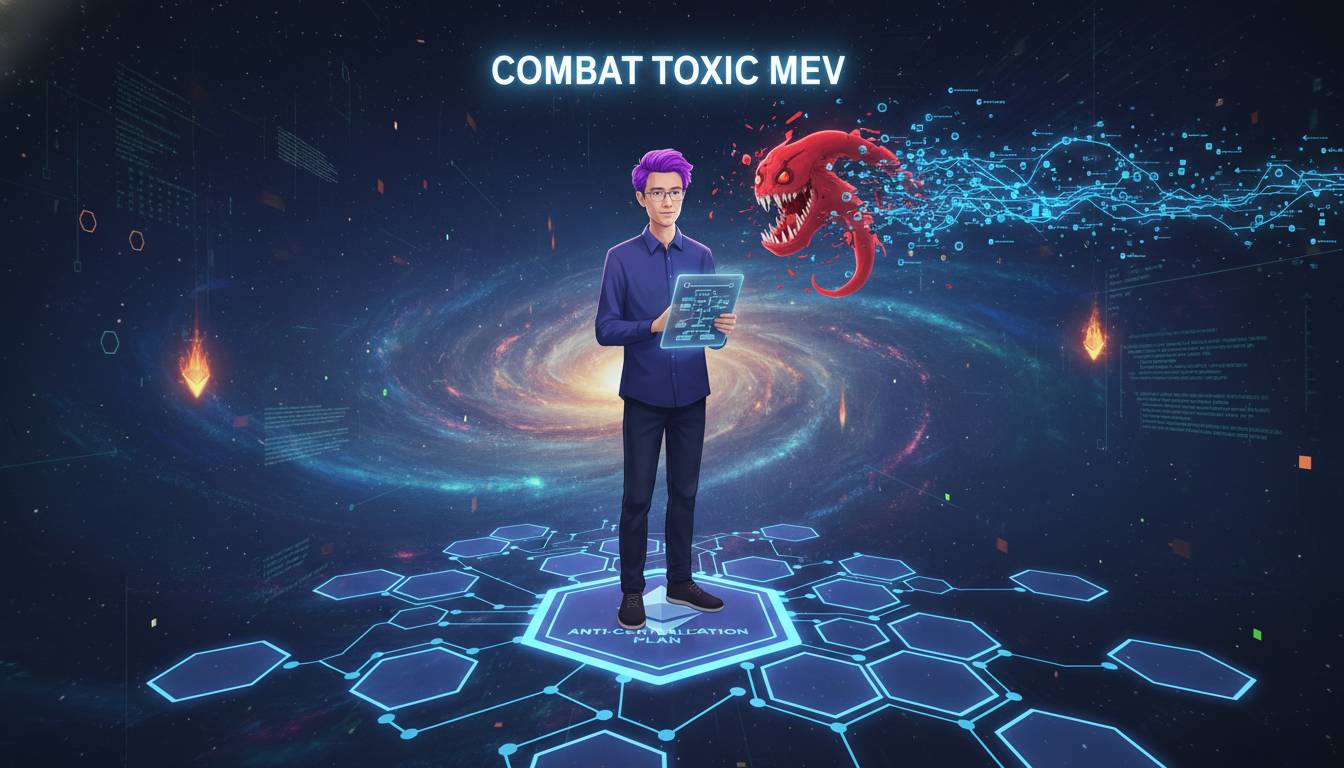
Vitalik Unveils Anti-Centralization Plan to Combat Toxic MEV on Ethereum
Ethereum co-founder Vitalik Buterin has introduced a fresh set of proposals aimed at curbing centralization in block production and mitigating the harmful effects of toxic MEV (Maximal Extractable Value). His vision, shared in a March 2, 2026 post, outlines a multi-pronged strategy to preserve Ethereum’s decentralization as it scales.
Introduction
Ethereum’s decentralization is under pressure—not just from validator concentration, but from the infrastructure that determines which transactions make it into blocks. Vitalik’s latest plan targets this centralization by reshaping block-building mechanics and shielding users from exploitative MEV practices. His proposals include randomized inclusion lists, encrypted mempools, anonymized routing, and a more distributed block-building model.
Finally, the block building pipeline.
In Glamsterdam, Ethereum is getting ePBS, which lets proposers outsource to a free permissionless market of block builders.
This ensures that block builder centralization does not creep into staking centralization, but it leaves the…
— vitalik.eth (@VitalikButerin) March 2, 2026
Randomized Inclusion Lists: Guarding Against Exclusion
Vitalik proposes a system where a small, randomly selected group of participants determines which transactions must be included in the next block. If these mandated transactions are omitted, the block is rejected. This mechanism ensures that even if a hostile builder dominates the market, they cannot permanently censor specific users.
Vitalik Buterin has shared a simplified L1 privacy roadmap aimed at improving user privacy without altering Ethereum's consensus. The plan focuses on four key areas: on-chain payment privacy, partial anonymization of in-app activity, privacy of on-chain reads, and network-level…
— Wu Blockchain (@WuBlockchain) April 11, 2025
This approach shifts some control back to the broader network, preventing a single builder from wielding unchecked power over transaction inclusion.
Encrypted Mempools: Neutralizing Toxic MEV
Toxic MEV—where bots front-run or sandwich user transactions by exploiting visibility into pending transactions—is a persistent threat. Vitalik’s plan includes encrypting transactions until they are finalized, preventing opportunistic actors from seeing them in advance.
No. This is not how this game works.
The person deciding the new EF leadership team is me. One of the goals of the ongoing reform is to give the EF a "proper board", but until that happens it's me.
If you "keep the pressure on", then you are creating an environment that is…
— vitalik.eth (@VitalikButerin) January 21, 2025
By hiding transaction contents until inclusion, encrypted mempools reduce the window for MEV exploitation, protecting users from predatory strategies.
Anonymized Routing: Shielding Transactions in Transit
Beyond block construction, transactions are vulnerable at the networking layer. Intermediaries can observe and exploit transactions before they even reach the mempool. Vitalik recommends anonymized routing systems to obscure transaction origins and paths, adding a layer of defense against front-running and surveillance.
Big changes:
* The Verge✅ is not just about "verkle trees", it's about "verification". Endgame: fully SNARKed ethereum
* The Scourge🧟(new): ensure reliable and fair credibly neutral transaction inclusion, solve MEV issues
* Single slot finality as stage 2 Merge🐼 milestone— vitalik.eth (@VitalikButerin) November 4, 2022
This measure strengthens privacy and decentralization by preventing centralized intermediaries from gaining undue visibility into user activity.
Distributed Block Building: Reducing Central Chokepoints
Vitalik envisions a future where block building is more distributed, reducing reliance on centralized builders. He suggests that not every transaction requires global coordination—many could be processed in parallel or through localized mechanisms.
This design would dismantle current chokepoints, enabling a more resilient and decentralized infrastructure as Ethereum scales.
Broader Context: The Scourge and Long-Term Roadmap
Vitalik’s proposals align with his broader “Scourge” roadmap, which targets centralization risks in staking and block production. He has previously highlighted that two builders currently produce approximately 88% of Ethereum’s blocks—a concentration that threatens censorship resistance and network integrity.
The Scourge track, part of Ethereum’s multi-phase roadmap, aims to counteract these trends by redistributing block production responsibilities and limiting excessive value extraction.
Interpretation: A Data-Driven Thesis
Vitalik’s plan signals a shift from reactive fixes to proactive decentralization engineering. By combining randomized inclusion, encrypted mempools, anonymized routing, and distributed block building, Ethereum can resist centralization pressures at multiple layers.
This multi-layered strategy addresses both the symptoms (toxic MEV, builder dominance) and the root causes (infrastructure centralization, network visibility). If implemented, it could significantly enhance Ethereum’s resilience and trustworthiness.
What Could Undermine the Plan?
- Technical Complexity: Encrypted mempools and anonymized routing require substantial protocol changes and coordination across clients.
- Adoption Resistance: Builders and validators accustomed to MEV revenue may resist changes that limit their profitability.
- Coordination Challenges: Rolling out randomized inclusion lists and distributed block building demands consensus across the ecosystem.
- Performance Trade-offs: Encryption and anonymization could introduce latency or complexity that impacts transaction throughput.
Forward Context: What Comes Next
Vitalik’s proposals are early-stage and conceptual. The next steps likely include:
- Formal Specification: Drafting EIPs (Ethereum Improvement Proposals) to define inclusion list mechanics, encrypted mempools, and routing protocols.
- Client Integration: Implementing prototypes in Ethereum clients and testing in testnets.
- Ecosystem Feedback: Gathering input from validators, builders, and developers to refine designs.
- Phased Rollout: Gradually deploying features, starting with optional encrypted mempools or inclusion list experiments.
- Monitoring Impact: Measuring MEV reduction, builder decentralization, and network performance post-implementation.
Vitalik’s anti-centralization plan is a bold step toward preserving Ethereum’s foundational principles. By engineering decentralization into the block-building pipeline, he aims to protect users from toxic MEV and ensure that no single entity can control transaction inclusion. The road ahead is complex, but the vision is clear: a more equitable, resilient Ethereum.
Disclaimer: This article is for informational purposes only and does not constitute financial or investment advice. Cryptocurrency investments carry significant risk, including the possibility of total loss. Past performance does not guarantee future results. Always conduct your own research and consult a qualified financial advisor before making investment decisions.
James Morgan is a seasoned general expert with over 8 years of professional experience. James specializes in content strategy, digital media, and audience engagement, bringing deep industry knowledge and practical insights to every piece of content.With credentials including Professional Journalist Certification and Bachelor's Degree in Communications, James has established a reputation for delivering accurate, well-researched, and actionable information. James's work has been featured in leading general publications and trusted by thousands of readers seeking reliable expertise.James is committed to maintaining the highest standards of accuracy and transparency, ensuring all content is thoroughly fact-checked and based on credible sources and current industry best practices. Connect: Twitter | LinkedIn | Website