
Intelligence
Top AI Tokens: Leading Cryptocurrencies Powering Artificial Intelligence

Artificial intelligence has become a defining force shaping our digital world, with applications spanning healthcare, finance, content creation, and beyond. Parallel to this surge, blockchain technology has continued its relentless evolution. The intersection of these realms—AI and crypto—has spawned a new class of digital assets: AI tokens. These cryptocurrencies are powering decentralized AI ecosystems, incentivizing data sharing, promoting collaboration, and fueling the compute-heavy demands of machine learning models.
Over the past several years, AI tokens have advanced from niche speculative interests to critical infrastructure supporting some of the most ambitious AI-driven blockchain projects. As technology markets undergo rapid transformation—driven by generative AI breakthroughs and decentralized finance—the significance of AI tokens for both developers and investors continues to expand.
Understanding AI Tokens: Defining Features and Market Dynamics
AI tokens are cryptocurrencies specifically designed to support blockchain projects that leverage artificial intelligence. At their core, these tokens can perform several functions:
- Provide access to AI-powered services or APIs
- Incentivize data sharing, labeling, or annotation
- Enable decentralized compute or storage for model training
- Govern protocol upgrades via decentralized autonomous organizations (DAOs)
Unlike Ethereum or Bitcoin, which serve generalized utility or value transfer roles, AI tokens are deeply linked to their project’s AI-oriented mission. The recent attention on these tokens is partly due to the AI sector’s exponential growth, with global AI investment reaching unprecedented heights.
Why AI Tokens Matter
The AI industry’s hunger for high-quality data, scalable compute, and privacy-preserving collaboration aligns seamlessly with blockchain’s decentralized ethos. AI tokens create economic incentives for participation in these networks, whether by sharing data, annotating datasets, or providing GPU resources for model training.
For example, platforms like Fetch.ai use their FET token to incentivize autonomous agents to deliver data and services, while SingularityNET’s AGIX enables users to buy and sell AI algorithms in a decentralized marketplace. This blending of blockchain and AI allows for more open, transparent, and inclusive AI development.
Top AI Tokens: Leaders Fueling Decentralized Intelligence
While the exact ranking of AI tokens can shift with market fluctuations, several projects have established themselves as consistent frontrunners in the space. These tokens typically back robust technical infrastructures and vibrant development communities.
1. SingularityNET (AGIX)
SingularityNET is an open, decentralized marketplace for AI algorithms and services. Built on Ethereum, it aims to democratize access to advanced AI by allowing anyone to monetize algorithms or purchase sophisticated AI capabilities directly. The AGIX token powers all network transactions, including payments for AI services and governance voting.
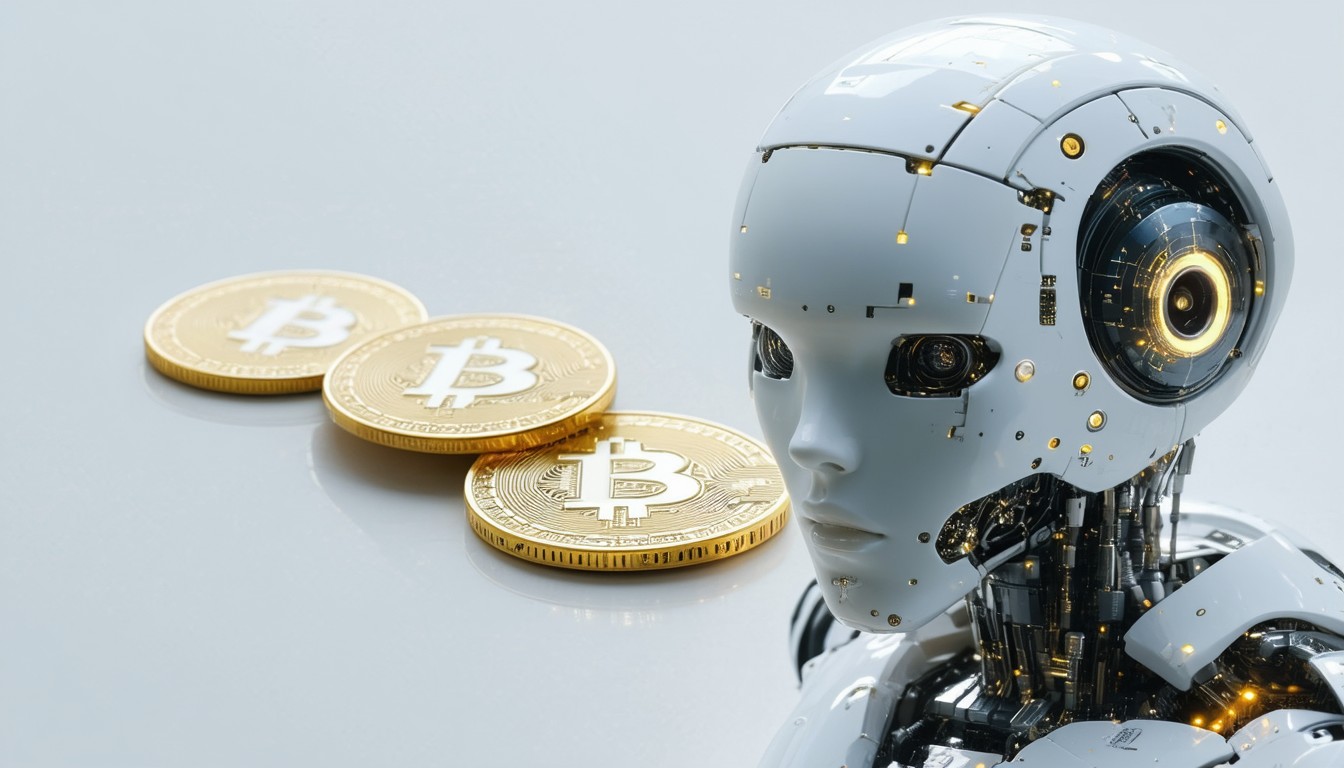
Notably, SingularityNET is home to Sophia, one of the world’s most well-known humanoid robots. The platform’s interoperability vision—linking multiple blockchains and AI systems—positions AGIX for potential longevity.
2. Fetch.ai (FET)
Fetch.ai has developed a decentralized network where autonomous agents—digital entities acting on behalf of users and devices—can transact, share data, and collaborate in real time. FET tokens are used to pay for services, stake in the network, and incentivize the development of useful agnostic AI tools.
Among Fetch.ai’s practical deployments are transportation logistics, supply chain optimization, energy grid management, and DeFi automation.
“AI tokens like FET move beyond hype, enabling new markets for decentralized and autonomous machine-to-machine economies,” observes Dr. Ben Goertzel, a renowned AI researcher.
3. Ocean Protocol (OCEAN)
Ocean Protocol is designed to unlock data for AI models while preserving privacy and control. Its OCEAN token allows users to buy, sell, or share data assets, facilitating a decentralized data marketplace. The protocol leverages blockchain technology to ensure secure data sharing, fair compensation, and transparent usage.
OCEAN has partnered with leading enterprises and research programs to facilitate data-driven AI across healthcare, automotive, and other privacy-sensitive sectors.
4. Numeraire (NMR)
Numeraire is the native token of Numerai, a hedge fund powered by a decentralized network of data scientists. Participants use machine learning to predict financial markets, staking NMR tokens on their models’ performance. Successful predictions are rewarded, making NMR both a governance and incentive mechanism.
This innovative approach has been recognized for its ability to blend crowdsourced AI with blockchain-managed incentives, improving the robustness of financial predictions.
5. Cortex (CTXC)
Cortex focuses on enabling AI models to be executed on-chain, making AI-powered smart contracts possible. The CTXC token rewards developers for contributing usable AI models and powers computation costs. Cortex’s vision is to decentralize AI computation, breaking the monopoly of major cloud providers.
Real-World Use Cases: Where AI Tokens Deliver Value
AI tokens are more than speculative assets; they underpin real-world applications that expand beyond trading charts.
- Decentralized Data Marketplaces: Ocean Protocol enables health organizations to monetize data while maintaining privacy, overcoming traditional data silos.
- Autonomous Agents for Industry: Fetch.ai’s technology is being piloted in urban mobility, allowing autonomous vehicles to negotiate battery charging slots in real time.
- Democratized AI Access: SingularityNET connects developers and businesses to AI services without centralized gatekeepers, unlocking new opportunities for small players.
Across all these initiatives, AI tokens facilitate a “network effect” by encouraging contributions and participation from a global community. The tokens’ utility and design directly impact project adoption and ecosystem growth.
Challenges and Future Prospects for AI Tokens
The promise of AI tokens also comes with risks and trade-offs. Security remains a paramount concern, especially as malicious actors seek to exploit smart contract vulnerabilities or manipulate tokenomics. Regulatory scrutiny is increasing in parallel, with authorities examining how AI tokens intersect with securities laws and data protection regulations.
Technical hurdles include ensuring sufficient scalability, accuracy of AI outputs, and preventing model or data poisoning. Nonetheless, the sector’s innovation pace remains high, with new models for decentralized compute, data DAO governance, and privacy-preserving machine learning emerging constantly.
Looking forward, as AI’s role in society continues to grow, AI tokens are poised to remain a hotbed for experimentation and societal impact—provided they can navigate evolving regulatory and technical landscapes.
Conclusion: Key Takeaways and Strategic Implications
AI tokens harness the strengths of both artificial intelligence and blockchain technology to drive innovation in decentralized data, compute, and services. The leading projects—SingularityNET, Fetch.ai, Ocean Protocol, Numeraire, and Cortex—each approach the intersection from unique angles, offering new models for incentivizing collaboration and broadening AI’s reach.
Developers, enterprises, and investors should monitor these evolving technologies, focusing on real-world utility, robust governance, and security best practices as the sector matures. The era of AI tokens illustrates a broader movement: unleashing collective intelligence through the merging of cryptography, data science, and distributed economic models.
FAQs
What are AI tokens?
AI tokens are cryptocurrencies that support blockchain projects involving artificial intelligence, enabling payments, data sharing, access to AI services, or governance within AI-focused ecosystems.
Why are AI tokens gaining popularity?
Growing demand for artificial intelligence and decentralized infrastructure is driving attention to AI tokens, as they facilitate secure, permissionless collaboration and monetization of data, models, and computing resources.
How can I buy AI tokens?
Most major AI tokens are available on popular cryptocurrency exchanges. Traders need a compatible crypto wallet and should conduct thorough research before investing.
Are AI tokens a good investment?
As with all cryptocurrencies, AI tokens carry risks as well as potential rewards. Their value often correlates to the adoption and success of the underlying AI projects.
What are some risks associated with AI tokens?
Risks include regulatory changes, project execution issues, security vulnerabilities, and market volatility. It’s essential to assess a project’s fundamentals and transparency before participating.
How do AI tokens differ from other cryptocurrencies?
Unlike general-purpose coins like BTC or ETH, AI tokens serve specialized roles—granting access to AI services, powering data marketplaces, or acting as rewards in decentralized AI networks.