


Amp
S&P 500 Index: Key Insights, Performance, and Market Trends

Few financial instruments command as much respect as the S&P 500 Index. Universally recognized as a pulse-point of the U.S. equity market, the index represents a broad swath of corporate America. For investors, fund managers, and policymakers, it serves as both a benchmark and a bellwether, reflecting prevailing trends and shifts in the economic landscape. Its composition of 500 leading publicly traded companies spans nearly every major sector, making it central to market analysis and portfolio construction.
Understanding the S&P 500 Index
Origin, Methodology, and Key Criteria
Launched in 1957 by Standard & Poor’s, the S&P 500 tracks the performance of large-cap U.S. companies. Far from a static list, its components are chosen by a committee using rigorous criteria: market capitalization (currently upwards of $13 billion for inclusion), U.S. headquarters, liquidity, and sector representation. The index uses a market-capitalization weighting, meaning larger companies have a proportionally greater influence on price movements.
Role in Global Markets
Because the S&P 500 Index accounts for roughly 80% of the total U.S. equity market capitalization, its fluctuations ripple across global financial systems. International investors often view movements in this benchmark as an indicator of global risk appetite or aversion, especially in uncertain geopolitical or economic climates. Moreover, trillions in assets are indexed or benchmarked to the S&P 500—both directly, through ETFs and mutual funds, and indirectly, via derivative products and asset allocation models worldwide.
Performance Trends: Cycles and Resilience
Historical Context and Recent Performance
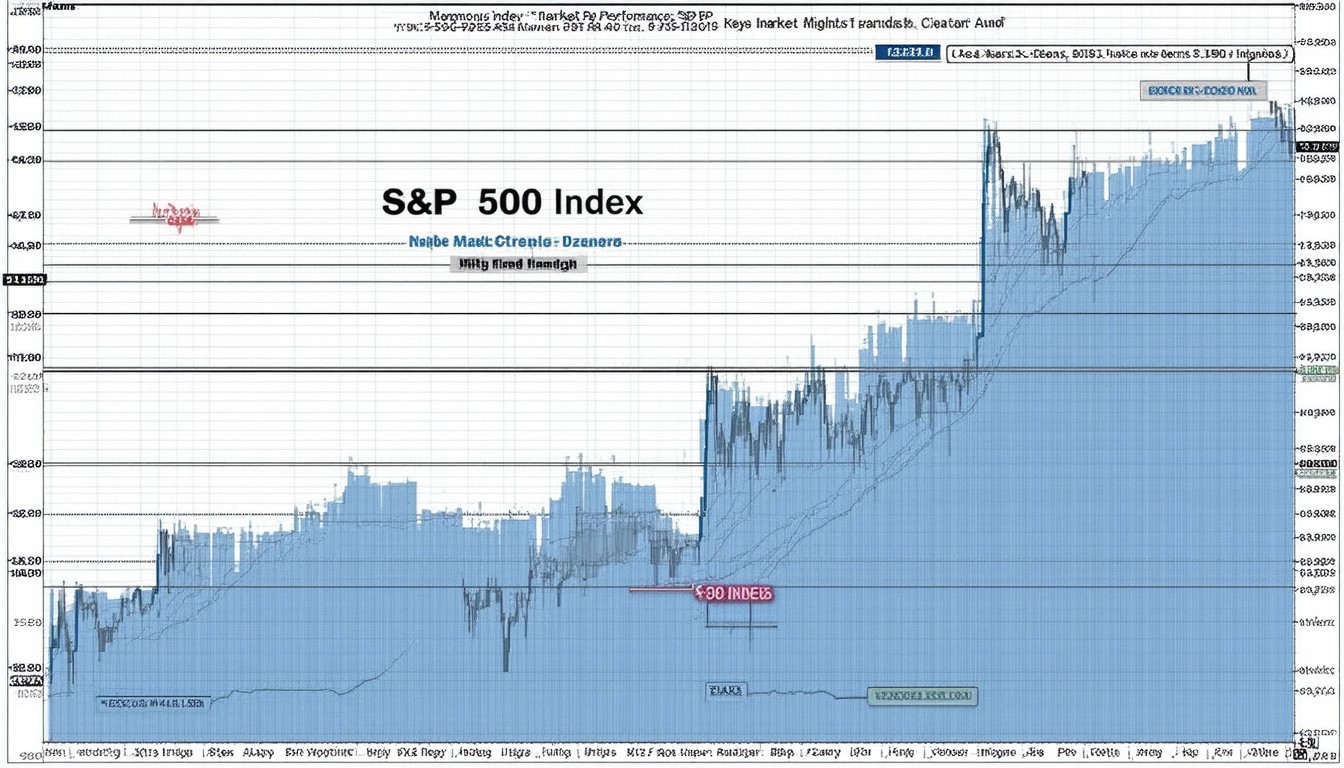
The S&P 500’s long-term track record is marked by resilience through market ebbs and flows. Over the past several decades, the index has delivered robust average annual returns—frequently cited in the 8–10% range, inclusive of both bull and bear markets. Dramatic episodes, such as the dot-com bubble, the 2008 financial crisis, and the COVID-19 shock, have each tested the index’s endurance. Yet each period of turbulence was typically followed by a recovery, reflecting both structural strengths and the innovative capacity of the represented companies.
“Despite periodic downturns, the S&P 500 Index has consistently rewarded patient investors, mirroring the adaptability of the underlying U.S. economy,” observes Dr. Elaine Morgan, senior investment strategist at Riverbank Capital.
Recent Shifts and Tech Sector Dominance
In the past decade, technology companies have come to dominate the S&P 500 like never before. The so-called “Magnificent Seven” (a cohort of mega-cap tech firms) now account for a substantial share of the index’s overall weight. This concentration carries benefits—rapid growth and innovation—but also introduces risks. Any shock to this sector or changing regulatory winds could disproportionately impact index performance, as evidenced during sharp market corrections tied to tech valuations.
Dividends, Volatility, and Drawdowns
While the S&P 500 is not strictly a dividend index, many of its constituents offer consistent payouts, providing a stable income component that has historically cushioned downside volatility. Nevertheless, periods of rapid interest rate hikes or global crisis can induce significant drawdowns. The COVID pandemic initially drove a sharp plunge, but recovery was swifter than in prior crises, propelled in part by fiscal stimulus and swift adaptation among top constituents.
The S&P 500 in Investor Portfolios
Benchmarking and Passive Investment
A core appeal of the S&P 500 lies in its use as a foundational benchmark for active and passive investors alike. Index funds and ETFs—such as the SPDR S&P 500 ETF Trust (SPY) and Vanguard’s S&P 500 ETF (VOO)—have democratized access, allowing both retail and institutional investors to track the market’s overall performance at low cost.
The “passive revolution” has dramatically altered market dynamics. A growing share of all U.S. equity investment now flows through index-based products, which in turn amplifies the importance of S&P 500 inclusion for individual companies. For example, when a firm is added to the index, its stock may experience a surge due to buying by index-tracking funds.
Active Management and Relative Returns
Active managers persistently measure their performance against the S&P 500, aiming to deliver “alpha”—returns above the benchmark. However, data suggests only a minority consistently outperform over the long run due to the index’s breadth and the compounding effect of low-fee accumulation.
Risks and Opportunities Facing the Index
Market Concentration and Sector Rotation
The weight of a small number of mega-cap stocks raises concerns about concentration risk. If leading tech stocks falter, the index could underperform other, more diversified benchmarks. Conversely, if sector rotation brings renewed interest to lagging areas (such as energy or financials), overall volatility might rise but with greater potential for diversification gains.
Economic Cycles and External Shocks
Beyond internal composition, the S&P 500’s fate is closely linked to macroeconomic variables: interest rates, inflation, employment, and corporate earnings. Unexpected rate hikes by the Federal Reserve or sudden geopolitical escalations have historically triggered sharp corrections. Yet, over time, the adaptability of constituent companies and the self-correcting nature of the index’s selection process tend to foster resilience.
Key Trends Shaping the Future
The Rise of ESG and New Economy Sectors
A growing number of investors demand that companies demonstrate environmental, social, and governance (ESG) leadership. While ESG is not a selection criterion for the main S&P 500, several listed firms now prominently report sustainability metrics. Clean energy, digital infrastructure, and health technology are gradually increasing their index representation, hinting at the U.S. economy’s evolving DNA.
Globalization and De-Globalization Pressures
Multinational revenue streams mean S&P 500 performance is sensitive to global factors—tariffs, supply chain disruptions, and exchange rate movements. De-globalization trends and reshoring could reshape corporate strategies and, by extension, the index itself.
Innovation, Regulation, and Earnings Outlook
Innovation remains a double-edged sword for the S&P 500. Pioneering firms drive outsized gains, yet regulatory scrutiny—especially of digital giants—could alter sector dynamics in profound ways. Looking ahead, the index’s performance will reflect not only earnings growth but also how companies navigate technological, political, and social transitions.
Conclusion: The S&P 500’s Enduring Influence
The S&P 500 Index continues to be an indispensable tool for assessing the health and evolution of the U.S. (and, by extension, global) equity markets. Its construction, market tracking ability, and adaptability ensure its relevance across investing cycles. Looking forward, investors should watch for shifts in sector composition, market concentration, and policy responses to dominant trends—including sustainability and innovation. Balancing these insights with disciplined, long-term strategy remains essential for anyone benchmarking or investing against this storied index.
FAQs
What makes the S&P 500 different from other stock indices?
The S&P 500 stands out by representing 500 of the largest publicly traded U.S. companies across all major sectors, using market capitalization weighting. This provides a broad, diversified snapshot of market trends compared to narrower indices like the Dow Jones Industrial Average or Nasdaq Composite.
How are companies selected for the S&P 500 Index?
A committee selects companies based on factors including market capitalization, U.S. headquarters, sector classification, liquidity, and proven profitability. The index is reviewed regularly, with changes reflecting shifts in the U.S. corporate landscape.
Is the S&P 500 a good benchmark for international investors?
Absolutely. Many investors worldwide use the S&P 500 as a key barometer for economic and market sentiment, not just for U.S. assets but as a signal for global equities due to the international exposure of its constituents.
How can I invest in the S&P 500 Index?
The most common routes are through index funds and ETFs such as the SPDR S&P 500 ETF Trust (SPY) or Vanguard S&P 500 ETF (VOO), which seek to replicate the index’s performance with low costs and broad diversification.
What risks should investors consider with S&P 500 exposure?
Key risks include sector concentration (especially in technology), economic cycles, and sensitivity to interest rates or regulatory changes. Diversification and a long-term view are recommended strategies to manage these challenges.
How is the S&P 500 likely to evolve in coming years?
Trends such as ESG investing, technological innovation, shifting sector weights, and potential regulatory changes will shape the index’s composition and performance. Regular monitoring and adaptation will be crucial for investors seeking to leverage its strengths.


