
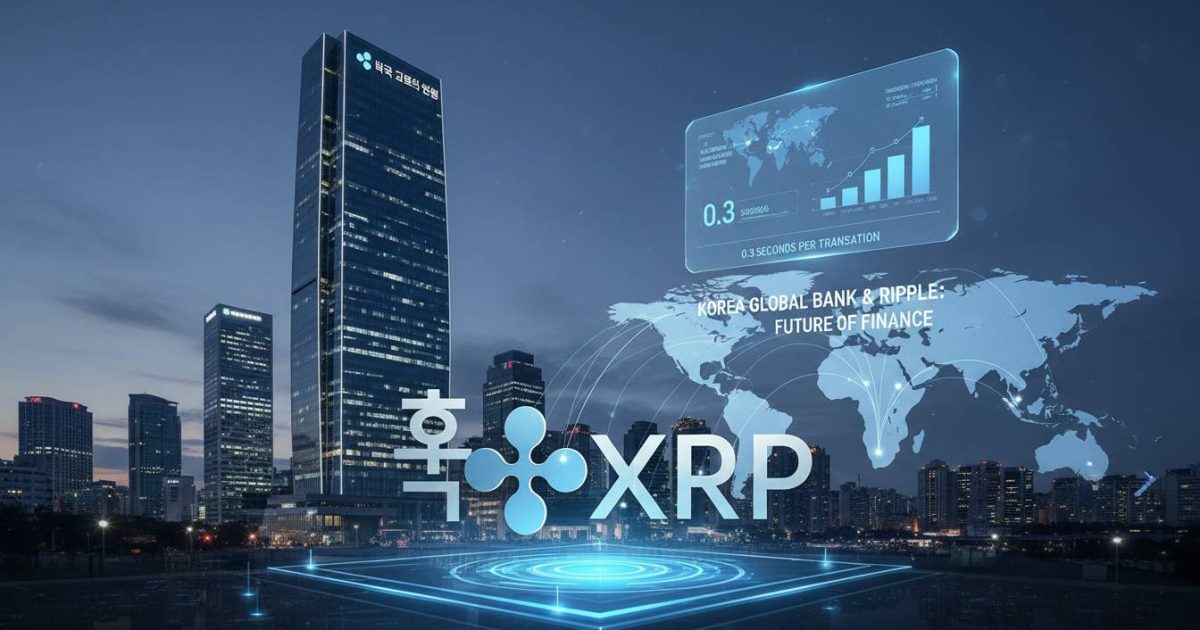
The intersection of traditional banking and blockchain technology continues to reshape global finance, and South Korea stands at the forefront of this transformation. As cross-border payment systems evolve, major financial institutions are exploring partnerships that could fundamentally alter how international transactions are processed. The question of whether XRP—the native cryptocurrency of the Ripple network—will receive significant banking adoption remains a pivotal one for the crypto industry. Understanding the current landscape requires examining which South Korean institutions have already engaged with Ripple’s technology, what these partnerships entail, and what they might signal about the future of digital asset integration in traditional finance.
Understanding Ripple’s Technology and Cross-Border Payments
Ripple operates as a blockchain-based payment protocol designed specifically for financial institutions and banks. Unlike many cryptocurrencies that focus primarily on decentralized transactions, Ripple’s technology aims to integrate with existing banking infrastructure. The company’s flagship product, RippleNet, provides a network for banks and payment providers to process cross-border payments with reduced friction and improved transparency compared to traditional correspondent banking systems.
The fundamental challenge Ripple addresses involves the inefficiencies inherent in international wire transfers. Traditional cross-border payments often require multiple intermediary banks, each adding delays and fees to the transaction. A payment from South Korea to the United States might pass through several correspondent banks, each taking their own processing time and charging their own fees. Settlement times can stretch to several business days, creating uncertainty for both senders and recipients.
Ripple’s blockchain technology aims to streamline this process by enabling direct, near-real-time transfers between participating institutions. The XRP token serves as a bridge currency in this system, allowing institutions to exchange one currency for another without needing pre-funded nostro accounts in multiple jurisdictions. This approach can potentially reduce liquidity costs and settlement times dramatically.
For South Korean banks, which process significant volumes of cross-border transactions given the country’s position as a major trading nation, these efficiencies could translate into substantial cost savings. The Won-Dollar and Won-Yen corridors are particularly important for Korean financial institutions, and any technology that can reduce processing times and costs in these routes represents a significant opportunity.
South Korean Financial Institutions and Blockchain Adoption
South Korea’s relationship with cryptocurrency is notably complex, reflecting a nation that has simultaneously embraced digital asset trading while maintaining regulatory oversight. The country’s financial authorities have developed a regulatory framework that includes licensing requirements for cryptocurrency exchanges and consumer protection measures. This balanced approach has created an environment where both traditional finance and digital assets can coexist.
Several South Korean financial institutions have explored or implemented blockchain solutions in various capacities. The Korea Financial Services Commission has expressed support for blockchain technology development while emphasizing the need for consumer protections. This regulatory clarity has encouraged banks to explore how distributed ledger technology might improve their operations.
Among the notable developments in this space, certain Korean financial institutions have conducted pilot programs involving Ripple’s technology. These pilots have typically focused on testing the feasibility of cross-border remittance services, evaluating how blockchain-based transfers might integrate with existing banking systems. The results of these programs have varied, with some institutions proceeding to fuller implementations while others have continued to evaluate the technology.
The country’s major banks, including Kookmin Bank, Shinhan Bank, and Woori Bank, have all explored blockchain applications in some capacity. Whether these explorations have directly involved Ripple specifically can be difficult to confirm definitively, as banks often do not disclose all technology partnerships publicly. The blockchain banking landscape continues to evolve, with new partnerships and pilot programs announced periodically.
XRP itself has been the subject of significant regulatory attention in South Korea, with discussions around its classification and treatment under Korean financial regulations. This regulatory scrutiny influences how financial institutions approach the token, balancing potential technological benefits against compliance considerations.
The Mechanics of Cross-Border Crypto Payments
To understand why banking partnerships matter for XRP, it is essential to grasp how cross-border cryptocurrency payments actually work in practice. When a bank or financial institution decides to process a payment using blockchain technology, they are not necessarily requiring their customers to hold or understand cryptocurrency. Instead, the bank can use blockchain as an underlying rails system while maintaining familiar interfaces for its customers.
In a typical implementation, a customer might initiate an international wire transfer through their bank’s standard online or mobile banking platform. The bank then processes this transfer using blockchain technology on the back end, converting the sender’s currency into XRP (or using other settlement mechanisms depending on the specific protocol), transferring the value across the blockchain, and converting back to the recipient’s currency at the destination. Throughout this process, the customer may never know that blockchain technology was involved at all.
For this to work, both the sending and receiving institutions must have arrangements in place to facilitate the transfer. This is where partnerships become crucial. A bank cannot process a blockchain-based cross-border payment to a destination where no corresponding institution exists to receive and deliver the funds. Consequently, the value of Ripple’s network depends significantly on the number and quality of banking partners who have implemented the technology.
The technical infrastructure required for these integrations involves significant development work. Banks must build or purchase systems that can interface with blockchain networks while meeting the security, compliance, and operational standards required in traditional banking. This integration work represents a substantial investment, and banks typically proceed cautiously, conducting thorough evaluations before committing to full implementations.
Market Dynamics and Adoption Challenges
Despite the technological promise, widespread banking adoption of cryptocurrency payments faces multiple challenges beyond the technical integration. Regulatory uncertainty remains a significant factor, as financial authorities in different jurisdictions have taken varying approaches to cryptocurrency oversight. Banks, which operate in heavily regulated environments, must carefully navigate these regulatory landscapes before implementing new technologies involving digital assets.
Market demand represents another consideration. While blockchain-based cross-border payments offer potential benefits in terms of speed and cost, these benefits must be substantial enough to justify the investment and regulatory complexity of implementation. For banks processing relatively low volumes of cross-border transactions, the case for blockchain adoption may be less compelling than for institutions with significant international payment flows.
Competition also influences the landscape. Ripple is not the only company offering blockchain-based cross-border payment solutions. Competing protocols and platforms also v for banking partnerships, creating a competitive environment where multiple technologies vie for adoption. The ultimate outcome will depend on factors including technology performance, regulatory relationships, and network effects.
For XRP specifically, the question of adoption relates to the broader utility of the token within Ripple’s system. While Ripple’s technology can theoretically operate without XRP, the token plays a specific role in certain settlement mechanisms. The degree to which banks adopt solutions that actually use XRP differs from the broader question of banks adopting Ripple’s technology generally.
What This Means for the Cryptocurrency Industry
The potential partnership between South Korean banks and Ripple represents more than a single business arrangement—it signals the continuing integration of cryptocurrency technology into traditional finance. South Korea, as a major economy with sophisticated financial infrastructure and a tech-savvy population, represents an important market for cryptocurrency adoption. Any significant banking endorsement of XRP or similar assets carries implications beyond the immediate transaction volume.
For the broader cryptocurrency industry, banking partnerships like these demonstrate that digital assets are increasingly being viewed as viable components of financial infrastructure rather than purely speculative instruments. This evolution could influence how other financial institutions approach cryptocurrency adoption, potentially creating network effects where initial implementations encourage broader participation.
The question of whether XRP is about to receive its “biggest banking endorsement yet” depends on the specific terms and scale of any actual partnership. Readers should evaluate announcements carefully, distinguishing between pilot programs, which represent testing rather than full implementation, and actual commercial deployments, which indicate more substantial commitment.
Conclusion
The development of cross-border payment partnerships between traditional banks and blockchain technology providers represents an important evolution in financial services. For South Korean banks, Ripple’s technology offers potential solutions to longstanding inefficiencies in international transfers. Whether XRP specifically will play a significant role in these systems depends on the specific implementations banks choose and the regulatory frameworks they operate within.
The cryptocurrency industry continues to mature, with institutional adoption representing one of the key frontiers for growth. South Korean banking partnerships, if they materialize at significant scale, could represent meaningful progress in this adoption journey. However, the timeline for such developments remains uncertain, and interested observers should monitor actual announcements from financial institutions rather than speculating on potential partnerships.
As the financial landscape continues to evolve, the intersection of traditional banking and digital assets will likely produce increasingly sophisticated and integrated solutions. The outcome of these developments will shape not only how cross-border payments are processed but also how the broader financial system incorporates blockchain technology into its core infrastructure.