


Market
Polymarket: Leading Decentralized Prediction Market Platform

Rising alongside blockchain innovations, prediction markets have resurfaced with remarkable momentum. At the forefront is Polymarket, a decentralized platform that empowers anyone to trade on the outcomes of real-world events. Whether the topic is economics, politics, technology, or pop culture, Polymarket harnesses collective intelligence and financial incentives to generate crowdsourced probabilities. With growing interest in harnessing the “wisdom of crowds,” Polymarket is pioneering a transparent and trust-minimized approach, redefining how opinions transform into financial stakes.
What Is Polymarket? A Closer Look at the Platform
Polymarket is a decentralized prediction market platform built primarily on Ethereum’s Polygon layer 2 network. Unlike centralized betting sites or traditional financial derivatives, Polymarket operates without intermediaries. Anyone can create or participate in markets predicting the outcomes of future events—ranging from presidential elections and crypto price milestones to the release dates of anticipated products.
Key features that distinguish Polymarket include:
- Non-custodial architecture: Users hold their own assets; the platform doesn’t take custody of funds.
- Open-access: No account registration or approval is required—anyone with a compatible wallet can engage.
- Transparency: Every trade and market resolution is recorded on the blockchain, auditable by all.
- Market diversity: With event topics spanning global news, finance, science, and more, the breadth of available markets is vast.
In practice, Polymarket draws a diverse user base—from retail speculators and crypto-enthusiasts to academics interested in prediction accuracy, shining a spotlight on collective forecasting power.
How Polymarket Works: Mechanics and Incentives
Market Creation and Trading
On Polymarket, users can create new markets about almost any verifiable event. Each market presents a binary or categorical outcome (e.g., “Will Candidate X win the election in 2024?”). Traders purchase “shares” representing possible results—YES or NO, for example. The price of each share reflects the crowd’s current probability estimate for that outcome.
For instance, if “YES” shares in a market for “Will Bitcoin surpass $100,000 by end of 2025?” are trading at $0.35, the platform is collectively estimating a 35% probability of that outcome according to participant sentiment.
Resolution and Payout
Once the event is resolved (based on a trusted data source, or oracle), winning shares become redeemable for $1 per share. Smart contracts on the Polygon network automate settlements. By minimizing the need for trusted third parties, Polymarket substantially reduces counterparty and custodial risks.
Liquidity and Market Efficiency
A key innovation on Polymarket is automated market making, which ensures continuous liquidity for a wide range of markets. This helps mitigate issues faced by peer-to-peer betting platforms where finding matching counterparties can be challenging.
“Prediction markets like Polymarket harness the collective intelligence of traders, often outperforming individual experts and traditional polling in aggregate accuracy,” explains Dr. Emily Richter, a researcher in decentralized finance.
Real-World Example: U.S. Elections
During high-stakes global events, such as the U.S. presidential election, Polymarket has seen surges in participation, with trading volumes sometimes rivaling legacy betting operators. This demonstrates the appetite for decentralized, transparent event forecasting and the platform’s robustness under real-world scenarios.
Benefits and Challenges of Decentralized Prediction Markets
Advantages: Openness, Transparency, and Censorship Resistance
Polymarket’s decentralized design offers substantial benefits:
- Resilience to censorship: Without a central authority, markets cannot be easily shut down or censored.
- Transparency: Blockchain-based records allow anyone to verify trades, market resolutions, and liquidity.
- Open participation: Geographic freedom removes barriers common to traditional platforms, welcoming a global pool of traders and perspectives.
Challenges: Regulatory Uncertainty and Information Quality
However, operating on the cutting edge also brings obstacles:
- Regulatory ambiguity: Many jurisdictions lack clear guidance on decentralized prediction markets. In recent years, similar platforms have faced scrutiny from U.S. regulators, creating operational risks.
- Potential for misinformation: While open access boosts inclusivity, it can also allow unsubstantiated or controversial markets, requiring effective moderation or community governance.
Progress continues as platforms like Polymarket adapt, emphasizing compliance (where possible) and leveraging blockchain auditability to bolster trustworthiness.
Impact on Forecasting and Information Markets
Polymarket has positioned itself not only as a betting venue, but as a tool for understanding crowd beliefs about real-world events. Scholars have noted that prediction markets can serve as effective “social thermometers,” capturing sentiment that’s often predictive.
Data Accuracy and Use Cases
Academic literature and recent case studies often find that well-constructed prediction markets edge out polls or pundit consensus for certain types of forecasting. Financial analysts, journalists, and policymakers increasingly reference market probabilities from platforms like Polymarket to gauge expectations for elections, major legislation, or economic policy shifts.
Integration into Broader Ecosystems
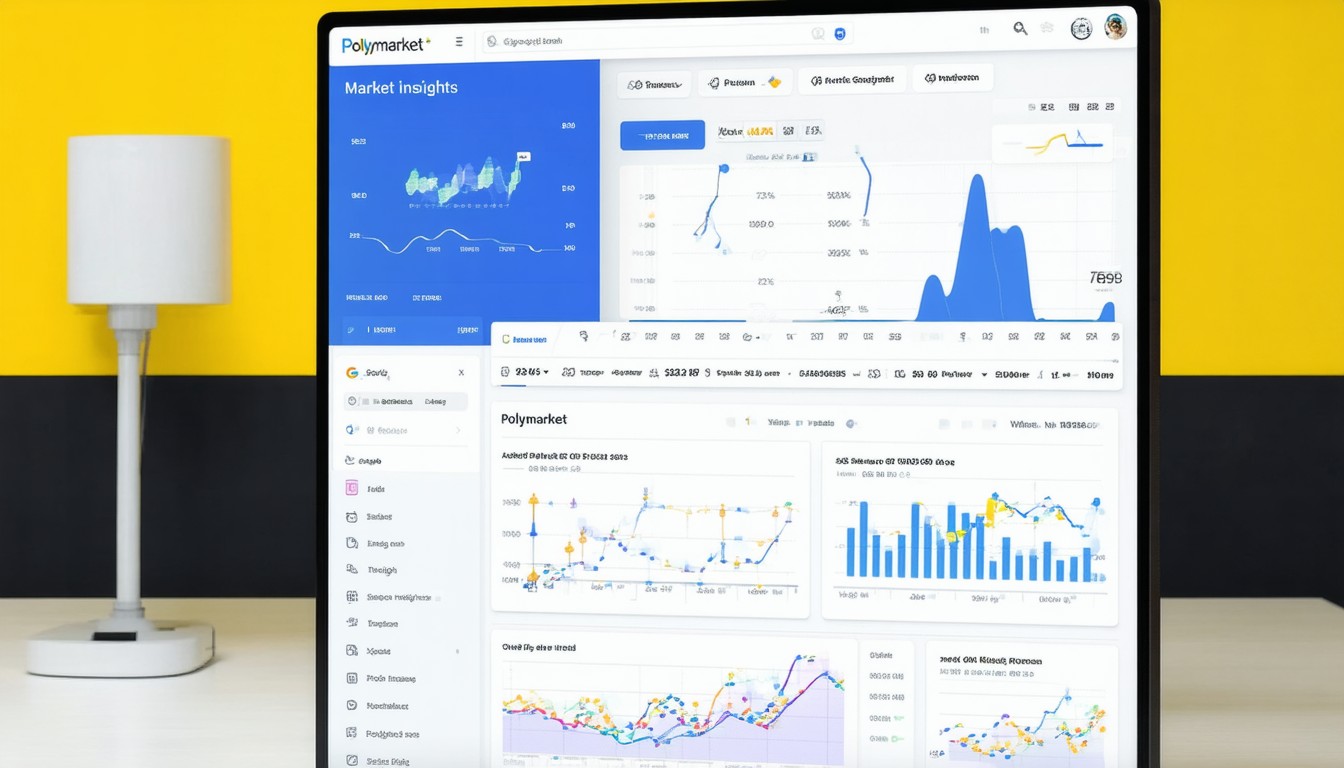
Recent trends also point toward integrating Polymarket’s data streams into analytics dashboards, research products, and investment tools, reflecting the platform’s increasing mainstream relevance.
The Future of Polymarket and Decentralized Prediction
Looking ahead, Polymarket and similar platforms could become foundational infrastructure for transparent, crowd-driven forecasting across industries. As the regulatory landscape evolves and blockchain scaling solutions enhance efficiency and reduce fees, barriers to participation will continue to decrease.
Some visionaries foresee prediction markets becoming embedded in governance processes (for DAOs or even corporations) or serving as real-time barometers for collective action, policy design, or investment strategy.
Conclusion: Polymarket’s Role in the Evolution of Prediction Markets
Polymarket demonstrates the transformative potential of decentralized prediction markets—offering unprecedented transparency, open participation, and resilient infrastructure for event forecasting. By harnessing blockchain’s strengths, the platform invites a paradigm shift in how collective beliefs are expressed, discovered, and monetized. As regulatory clarity improves and real-world adoption grows, Polymarket is poised to remain a leader at the intersection of blockchain, data, and decision sciences.
FAQs
What is Polymarket used for?
Polymarket allows users to trade on the outcomes of real-world events, helping aggregate crowd-based probabilities and serving as a financial platform for event-based speculation.
How do I participate on Polymarket?
Participation requires a Web3 wallet and cryptocurrency (usually USDC on Polygon). No traditional account registration is necessary; simply connect your wallet and start trading or creating markets.
Is Polymarket legal?
The legality of decentralized prediction markets varies by jurisdiction and is subject to change. Users should consult local regulations and be aware of evolving guidance from financial authorities.
How are events resolved on Polymarket?
Markets are resolved using third-party oracles or trusted data sources, with outcomes recorded on the blockchain and smart contracts automatically distributing winnings.
Can anyone create a market on Polymarket?
Yes, as long as the event is objectively verifiable and meets platform guidelines, anyone can create a new prediction market.
What risks are associated with using Polymarket?
Risks include potential regulatory uncertainty, cryptocurrency volatility, and the chance of market manipulation or misinformation in event descriptions. Users should evaluate these factors before participating.