News
Ethereum Price Prediction: Scaling, Security & AI Edge
Explore Ethereum Price Prediction: ETH Scaling Security and AI Crossroads as ETH tests $1,850. See what scaling and security trends could mean for investors ✓

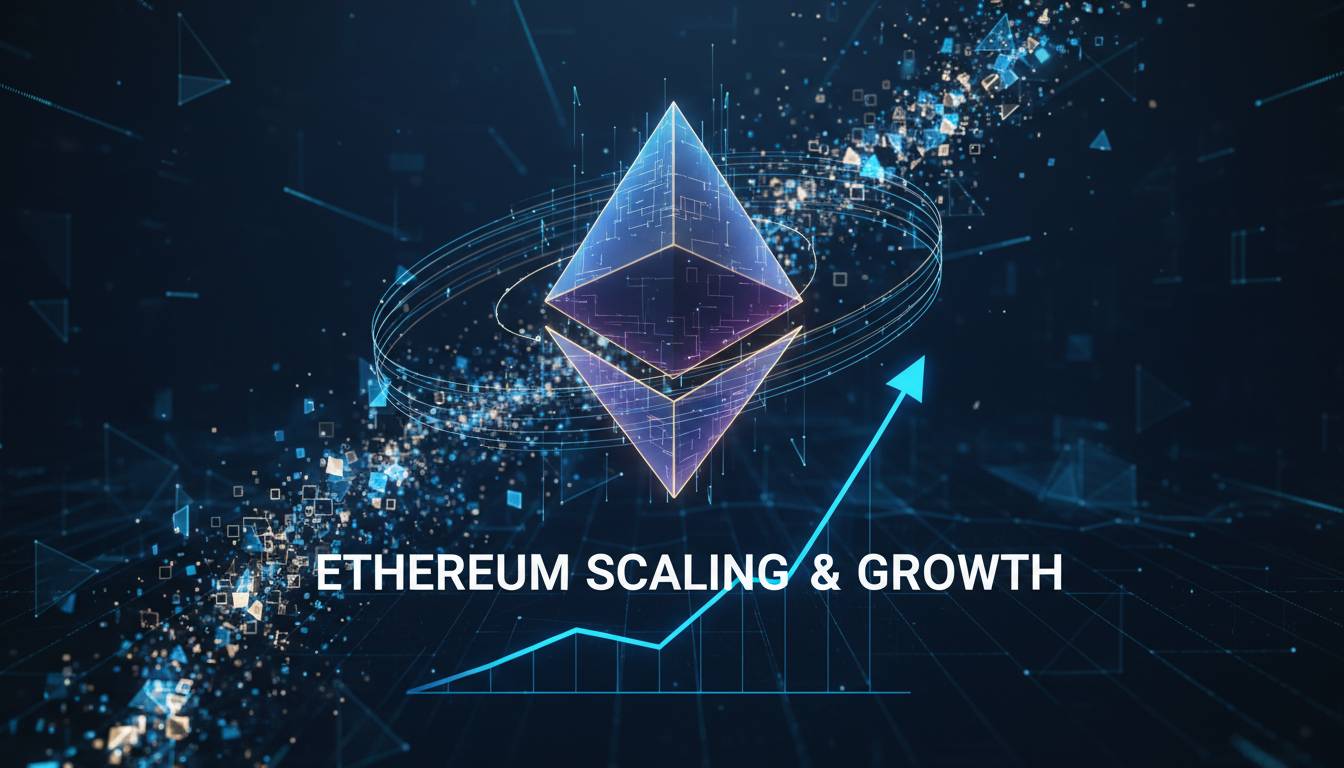
Ethereum traded near $1,853 on March 25, 2026, after a weak first quarter left ETH well below its early-March close near $1,982, according to CoinGecko historical data and spot pricing snapshots. The core story is no longer price alone: Ethereum’s valuation is being pulled by three measurable forces at once—layer-2 scaling growth, protocol-level security work, and a widening push into decentralized AI research and tooling. That mix matters because it shapes both network usage and the market’s willingness to pay for ETH as the base asset securing the system.
📊
ETH is trading far below its March 3 close, even as Ethereum’s scaling roadmap advances.
CoinGecko historical data shows ETH closed at $1,982.46 on March 3, 2026, while a later CoinGecko ETH/USD snapshot showed $1,852.81. Ethereum.org says the Fusaka upgrade went live on December 3, 2025, with PeerDAS positioned as a major scaling feature.
Ethereum Snapshot
| Metric | Value | Source |
|---|---|---|
| ETH spot reference | $1,852.81 | CoinGecko snapshot |
| ETH close on March 3, 2026 | $1,982.46 | CoinGecko historical data |
| Ethereum L2 total value secured | About $38B-$44B | L2BEAT / Ethereum Reports |
| Full danksharding blob target | 64 blobs | Ethereum.org |
| Proto-danksharding blob range | Average 3, max 6 | EF Pectra post |
Source: CoinGecko, L2BEAT, Ethereum.org, Ethereum Foundation blog | Data referenced from pages crawled in March 2026
— jaehaerys 🪽 (@0xJaehaerys) July 14, 2025
Why $38B-$44B in L2 Value Matters for ETH
Ethereum’s medium-term bull case still runs through scaling. L2BEAT data cited in a March 2026 Ethereum Reports review places the layer-2 ecosystem at roughly $38 billion to $44 billion in total value secured, with Base and Arbitrum accounting for 77% of L2 DeFi TVL. That concentration is important. It shows Ethereum is winning activity through rollups, but it also means a large share of usage depends on a small number of execution environments.
For ETH, that creates a split signal. On one side, more rollup usage supports Ethereum’s role as the settlement and data-availability layer. On the other, fee compression on the base layer can limit near-term upside if activity migrates faster than value capture returns to ETH holders. Ethereum.org’s danksharding roadmap says proto-danksharding began with six blobs and full danksharding aims for 64, with a long-term design goal of making rollup transactions dramatically cheaper and supporting more than 100,000 transactions per second. That is structurally positive for adoption, but not automatically positive for price on a quarter-by-quarter basis.
Ethereum Scaling Timeline
March 2024: Dencun brought proto-danksharding to mainnet, introducing blobs for cheaper rollup data posting, according to Ethereum.org.
$ETH retested the $1,750-$1,800 support zone as expected.
Now, Ethereum is having a bounceback, but it still needs more push from the bulls.
Until ETH reclaims the $2,000 level, it's still likely that the entire pump could be retraced. pic.twitter.com/egW5XSOPEx
— Ted (@TedPillows) February 25, 2026
May 7, 2025, 10:05:11 UTC: Pectra activated on Ethereum mainnet, with the Ethereum Foundation saying the network then supported an average of 3 blobs per block and a maximum of 6.
December 3, 2025: Fusaka went live, and Ethereum.org identifies PeerDAS as the headline feature for scaling blob capacity.
How PeerDAS and 64-Blob Ambitions Reframe Valuation
The market is starting to price Ethereum less like a monolithic smart-contract chain and more like a modular data and security layer. Ethereum.org describes PeerDAS as the key Fusaka feature because it reduces the burden on full nodes to store every blob while pushing the network toward larger data capacity. In plain terms, Ethereum is trying to scale without abandoning the decentralization constraints that define its security model.
2026 Ethereum Security Overhaul Shocks Devs: Why Speed Takes Backseat
Ethereum Foundation now prioritizes security over speed for zkEVMs, setting critical milestones through 2026. Teams slashed proving times to 16 seconds and cut costs 45x, yet security remains urgent as…
— CosmosWarming – Automation X (@CosmosWarming) December 21, 2025
That matters for any price forecast. If Ethereum can expand blob throughput while preserving credible verification by nodes, it strengthens the argument that ETH remains the reserve asset of the rollup economy. If that transition stalls, competing chains can keep marketing simpler user experiences and faster execution. The valuation question is therefore tied to whether Ethereum can convert technical progress into visible demand for blockspace and settlement.
ℹ️
Ethereum’s roadmap still points to rollup-centric scale, not a return to heavy mainnet execution.
Ethereum.org says full danksharding expands blobs from 6 in proto-danksharding to 64, while the March 13, 2026 roadmap update keeps scaling, account abstraction and interoperability at the center of development.
What Security Data Says as Validator Scale Expands
Security is the second leg of the ETH thesis. Third-party staking summaries in early 2026 point to roughly 34 million ETH staked and about 1.06 million validators, while separate reporting around the validator queue showed nearly 977,000 ETH waiting to enter at one point, with an estimated 17-day activation delay. Those figures should be treated carefully because they come from secondary reporting, but they align with the broader picture of a very large validator set and a maturing staking market.
Scale alone does not remove risk. A January 2026 academic paper on eclipse attacks against Ethereum’s peer-to-peer network argued that post-Merge execution-layer nodes still face underexplored attack surfaces. Separately, Ethereum Foundation security pages show formal audits tied to Pectra system contracts and earlier KZG-related work. The takeaway is straightforward: Ethereum’s security story is not static. It is improving through audits and protocol work, but the attack surface also evolves as the network grows more complex.
Security and Staking Signals
| Indicator | Observed Figure | Why It Matters |
|---|---|---|
| Staked ETH | About 34 million ETH | Higher economic security, lower liquid float |
| Validators | About 1.06 million | Large participation base, but more operational complexity |
| Validator queue | About 977,000 ETH waiting | Shows staking demand and onboarding friction |
| Pectra/Fusaka audits | Published audit records | Evidence of formal review before and after upgrades |
Source: CoinLaw summary citing beacon data, Cointelegraph citing Ethereum Validator Queue, Ethereum Foundation security pages | Referenced in March 2026
Can Decentralized AI Become a New ETH Demand Driver?
The third variable is newer but increasingly visible. The Ethereum Foundation’s February 5, 2026 PhD Fellowship announcement explicitly included research at the intersection of decentralized AI and Ethereum. On February 23, 2026, the Foundation’s DeFi statement also referenced “user-controlled AI” as part of the ecosystem’s future design space. That is not the same as immediate revenue, but it is a clear institutional signal that Ethereum sees AI-linked applications as a strategic area.
Outside the Foundation, academic work is also moving. A March 2026 paper titled EVMbench evaluated AI agents on smart-contract security tasks using 117 curated vulnerabilities from 40 repositories under a local Ethereum execution environment. That matters because AI can cut both ways for ETH. Better automated auditing, code review and agent-driven onchain activity could increase Ethereum usage. At the same time, more capable AI systems can lower the cost of discovering and exploiting smart-contract weaknesses.
For price, the AI angle is best viewed as optionality rather than a base-case catalyst. It adds upside if Ethereum becomes the preferred coordination and settlement layer for agentic applications. It adds risk if AI accelerates exploit cycles faster than the ecosystem improves defenses.
Three Paths for ETH if $1,850 Holds or Breaks
A factual price framework starts with the current range. CoinGecko data places ETH near $1,853, versus a March 3 close near $1,982. That leaves ETH below a recent reference point while the network continues to ship roadmap items. In one scenario, scaling adoption deepens, L2 value secured remains elevated, and staking demand keeps supply relatively tight; that combination would support a recovery narrative. In a second scenario, ETH remains range-bound because rollup growth does not translate into stronger fee capture or broader risk appetite. In a third, security concerns or broader market weakness push ETH below the mid-$1,800 area and delay any rerating.
The evidence today favors a conditional, not explosive, setup. Ethereum still has the deepest combination of settlement credibility, developer infrastructure and roadmap continuity among smart-contract platforms. But the market is asking for proof that scaling, security and new AI-linked use cases can feed back into ETH itself rather than only into the wider ecosystem.
Frequently Asked Questions
What is Ethereum’s latest referenced price in this article?
This article uses a CoinGecko ETH/USD snapshot showing $1,852.81 and CoinGecko historical data showing a March 3, 2026 close of $1,982.46. Those figures provide a dated reference range rather than a live quote, and both were available on pages crawled in March 2026.
Why do Ethereum layer-2 networks matter for ETH price?
L2BEAT data cited by Ethereum Reports places Ethereum layer-2 value secured at roughly $38 billion to $44 billion in March 2026. That supports Ethereum’s role as the base settlement layer, but investors still watch whether rising L2 usage translates into stronger ETH demand, fee generation and staking participation.
What is the main scaling milestone after Dencun and Pectra?
Ethereum.org identifies Fusaka, which went live on December 3, 2025, as a major step because it adds PeerDAS. Ethereum’s broader danksharding roadmap still targets an expansion from 6 blobs in proto-danksharding to 64 blobs in full danksharding, a key long-term scaling threshold.
Is Ethereum security improving or becoming more complex?
Both are true. Ethereum Foundation security pages show published audits tied to protocol upgrades, while academic work in January 2026 examined eclipse attacks against Ethereum nodes. At the same time, secondary 2026 staking summaries point to about 34 million ETH staked and roughly 1.06 million validators, which increases economic security but also operational complexity.
How does AI connect to Ethereum’s valuation?
The Ethereum Foundation has formally included decentralized AI in 2026 research priorities, and March 2026 academic work tested AI agents on Ethereum smart-contract security tasks. If AI-driven applications settle on Ethereum or its rollups, that could support ETH demand. If AI mainly increases exploit pressure, the effect could be negative.
Disclaimer: This article is for informational purposes only and does not constitute financial or investment advice. Cryptocurrency investments carry significant risk, including the possibility of total loss. Always conduct your own research and consult a qualified financial advisor before making investment decisions.

Debra Phillips is a seasoned general expert with over 13 years of professional experience. Debra specializes in content strategy, digital media, and audience engagement, bringing deep industry knowledge and practical insights to every piece of content.With credentials including Professional Journalist Certification and Bachelor's Degree in Communications, Debra has established a reputation for delivering accurate, well-researched, and actionable information. Debra's work has been featured in leading general publications and trusted by thousands of readers seeking reliable expertise.Debra is committed to maintaining the highest standards of accuracy and transparency, ensuring all content is thoroughly fact-checked and based on credible sources and current industry best practices. Connect: Twitter | LinkedIn | Website