


Ethereum
Ethereum Price Prediction: Expert Analysis and Future Outlook

Ethereum stands at the forefront of blockchain innovation, fueling thousands of decentralized applications (dApps) and serving as the foundation for the booming decentralized finance (DeFi) and NFT sectors. As the second-largest cryptocurrency by market capitalization, Ethereum’s price movements capture the attention of investors, developers, and enterprises alike. Understanding Ethereum price prediction is more than speculative curiosity—it’s vital for decision-making in an industry defined by volatility, technology shifts, and growing institutional interest.
Recent Ethereum Price Trends and Macro Influences
Ethereum’s price trajectory has been notably dynamic since its launch in 2015. After surging past $4,000 in late 2021 on the back of DeFi and NFT hype, Ethereum—like most cryptocurrencies—experienced a period of sharp correction through 2022. Several macroeconomic forces played roles, including inflation fears, shifting central bank policies, and global economic uncertainty.
The Fed, Inflation, and Market Correlation
Digital assets, Ethereum included, are now seen by many investors as risk-on assets. During periods of aggressive interest rate hikes by the U.S. Federal Reserve, capital flowed out of crypto and tech stocks. Conversely, policy signals about future rate pauses or cuts often spark renewed inflows. Ethereum’s 2023-2024 price recovery mirrored broader risk appetite in financial markets, reflecting increasing entwining with traditional finance.
Ethereum Upgrades and Technical Progress
Crucially, Ethereum’s network upgrades have exerted a profound impact on price sentiment. The landmark “Merge” in September 2022 transitioned Ethereum from proof-of-work to proof-of-stake, dramatically reducing its energy consumption—by some estimates, over 99%. This not only answered persistent ESG criticism, but also attracted interest from institutional and environmentally conscious investors.
Technical Analysis: Patterns and Signals Shaping Outlook
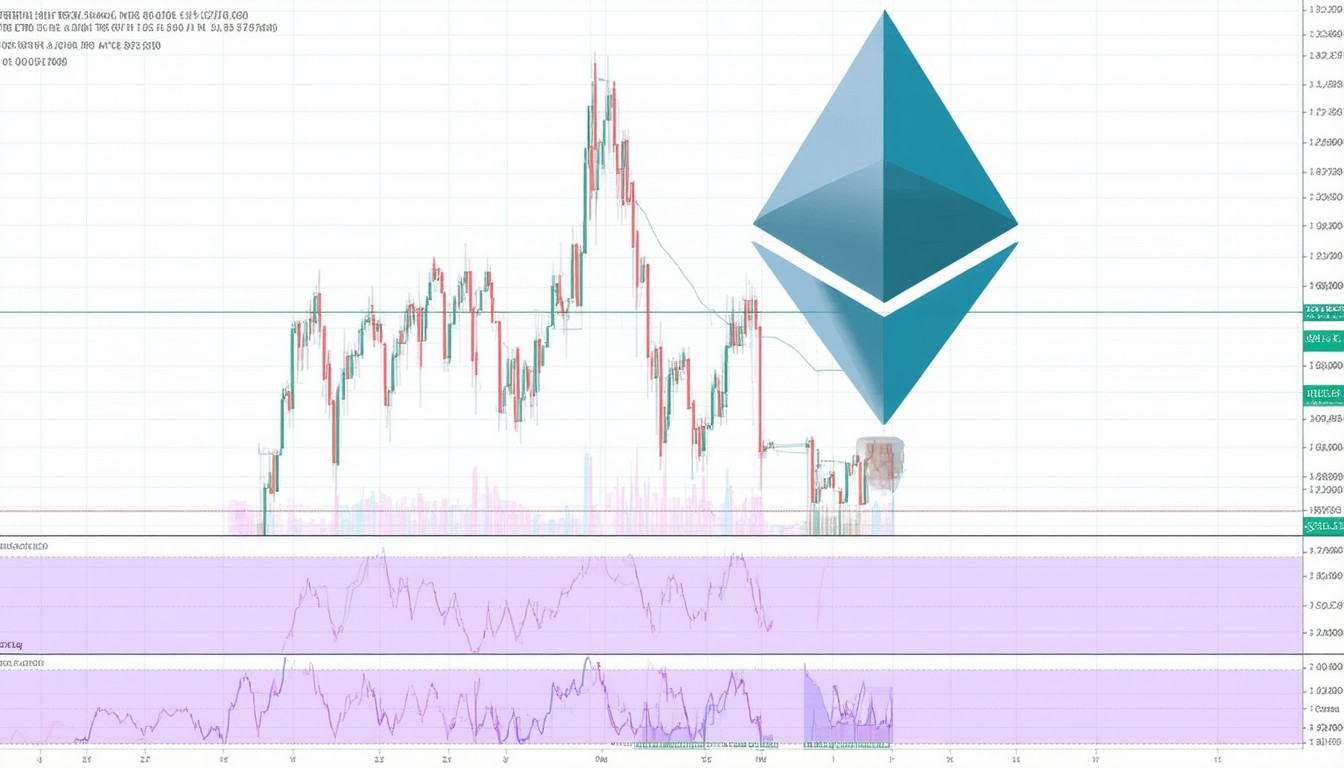
Technical analysis remains a staple among Ethereum traders. Price patterns, volume metrics, and on-chain data offer actionable insights—though not guarantees—about where ETH may be headed.
Support and Resistance: Key Price Levels
As of mid-2024, analysts often cite the $1,600–$2,000 range as crucial support. A sustained break below this band historically leads to accelerated downside, while holding above it suggests underlying strength. On the upside, resistance levels near $2,500–$3,000 have repeatedly presented hurdles, fueled in part by traders taking profits near psychologically significant round numbers.
Moving Averages and Relative Strength
Frequently used technical indicators include the 100-day and 200-day moving averages (MAs). When Ethereum trades above these averages, the prevailing trend is often deemed bullish. Conversely, a cross below these averages can signal incoming price pressure.
The Relative Strength Index (RSI), another popular momentum oscillator, often provides early warnings for overbought or oversold conditions. During sustained bull runs, Ethereum’s RSI frequently approaches or surpasses 70—a traditional threshold for overbought territory.
On-Chain Metrics: Activity and Holder Behavior
On-chain data—such as wallet activity, ETH held on exchanges, and staking trends—paints a nuanced picture of market sentiment. For example, growing ETH deposits in staking contracts signal long-term confidence and reduced circulating supply, potentially supporting prices during otherwise muted markets.
“Ethereum’s price resilience can be partly attributed to the shift toward staking, which not only diminishes liquid supply but also aligns network incentives with long-term holding,” notes blockchain strategist Grace Lau from Edge Analytics.
Fundamental Drivers of Ethereum’s Future Value
While technicals guide short- to mid-term trading, the fundamental case for Ethereum centers on adoption, utility, and innovation.
Real-World Utility and Ecosystem Growth
Ethereum’s status as a programmable blockchain means it underpins smart contracts across sectors: finance, gaming, supply chains, and more. As more projects migrate from legacy chains or launch natively on Ethereum Layer 2s (like Arbitrum, Optimism, or zkSync), demand for ETH—as both a transactional fuel and staking asset—grows.
Competition and Scaling Solutions
However, Ethereum’s market dominance faces challenges. Competing smart contract platforms (e.g., Solana, Avalanche, and Cardano) tout faster speeds and lower costs. Ethereum’s roadmap, including upcoming updates like “proto-danksharding” and data availability improvements, aims to strengthen its scalability credentials. Effective rollouts could meaningfully accelerate user adoption and, by extension, ETH price.
Regulation and Institutional Adoption
Clarity from regulators remains a pivotal issue. Some institutional players remain cautious, awaiting definitive legal frameworks for digital assets. However, several large asset managers and payment companies have started engaging with Ethereum through staking, custody solutions, and product development, showing rising mainstream acceptance.
Expert Ethereum Price Predictions: Ranges and Rationales
Forecasting the future price of Ethereum invites both data-driven analysis and prudent humility. Many analysts identify a range of potential outcomes rather than single-point targets.
- Optimistic scenarios anticipate ETH breaking previous all-time highs within a few years, provided Ethereum’s role in DeFi and tokenization continues expanding at a robust pace.
- More conservative projections suggest a period of consolidation between $2,000 and $3,000, especially amid global macro uncertainty and scaling competition.
- Bearish cases point to failed upgrades or regulatory crackdowns as risks that could test support levels well below $2,000.
Historical cycles in crypto markets remind observers that rapid price appreciation is often followed by steep retracements. However, the growing integration of Ethereum into mainstream finance, and the reduction of its environmental footprint, arguably set today’s ETH apart from previous bull-bear cycles.
Strategic Outlook: Navigating High Volatility
For investors considering Ethereum, strategic agility is key. Monitoring global macro trends, regulatory news, and technical factors remains essential. Dollar-cost averaging—the practice of buying a fixed dollar amount at regular intervals—offers a disciplined approach to navigating volatility. Long-term portfolio strategies may include a modest allocation to ETH, balancing risk with exposure to a technology underpinning broad swathes of Web3 innovation.
Conclusion: Ethereum’s Price Trajectory Remains Dynamic
Ethereum’s price prediction landscape reflects both the possibilities and challenges of a rapidly evolving digital ecosystem. Technical and fundamental analyses highlight a blend of optimism, caution, and complexity. As Ethereum’s utility grows and its ecosystem matures, its price is likely to remain a bellwether for the crypto industry at large—volatile yet full of long-term potential.
FAQs
How accurate are Ethereum price predictions?
Ethereum price predictions can offer useful scenarios based on historical data, technical indicators, and fundamental trends. However, due to market volatility and unforeseen events, no forecast is ever guaranteed.
What factors most influence Ethereum’s price?
Major drivers include network upgrades, adoption in DeFi and NFTs, regulatory developments, macroeconomic conditions, and competition from other blockchains. Technical factors and on-chain activity also play significant roles.
Will Ethereum outperform Bitcoin in the future?
Ethereum’s potential to outperform Bitcoin often hinges on its broader utility and adoption in smart contracts, but both assets respond differently to macro trends and market cycles. Past performance is not a reliable predictor of future results.
How does staking affect Ethereum’s price?
Staking reduces the liquid supply of ETH, as tokens are locked up to secure the network. This can support price stability or appreciation during periods of increased demand.
Is now a good time to invest in Ethereum?
The decision to invest depends on individual risk tolerance, financial goals, and market outlook. Consulting with financial professionals and staying informed about market risks is recommended.
What risks should investors be aware of when buying Ethereum?
Risks include regulatory changes, network upgrade setbacks, security vulnerabilities, and broader market downturns. Diversification and proper risk management are essential strategies for crypto investors.