News
BTC USD Price Outlook: Bitcoin Rebounds as Gold Slides
Explore the BTC USD Price Outlook as Bitcoin shows resurgence while gold extends its losing streak. Get key market insights, trends, and price drivers.

Bitcoin rebounded toward the $70,000 area on March 25, 2026, while gold extended a sharp pullback after a multi-week run, reviving the debate over whether capital is rotating back into crypto from traditional safe havens. The move matters because it combines spot price recovery, still-cautious derivatives positioning, and a macro backdrop shaped by inflation data and rate-cut expectations.
As of March 25, 2026, market coverage and exchange-linked data cited by CoinStats AI and other market trackers showed Bitcoin trading near $70,200 after recovering from lows around $66,370 set on March 9, 2026. Over the same March period, gold’s rally lost momentum after what multiple market reports described as a notable losing streak reversal following earlier strength. CME-linked options commentary also showed traders positioning for a Bitcoin rebound even after a roughly 50% correction from the October 2025 to February 2026 period.
💡
Bitcoin’s rebound is happening with restrained leverage, not euphoric positioning.
CoinGlass-linked reporting in March 2026 showed funding rates near or below neutral and open interest well below the 2025 peak, suggesting the bounce is less crowded than prior rallies.
Bitcoin and Gold Snapshot
| Metric | Bitcoin | Gold |
|---|---|---|
| Latest cited price zone | About $70,200 on March 12, 2026 | Pullback after a multi-session losing streak in March 2026 |
| Recent low / stress point | About $66,370 on March 9, 2026 | Reports flagged a break in prior winning momentum |
| Positioning signal | Funding briefly negative; open interest reset | Profit-taking after strong prior run |
| Macro sensitivity | ETF flows, inflation data, Fed path | Dollar, yields, Fed path, safe-haven demand |
Source: CoinStats AI market analysis, CME Group commentary, and market reports reviewed on March 25, 2026.
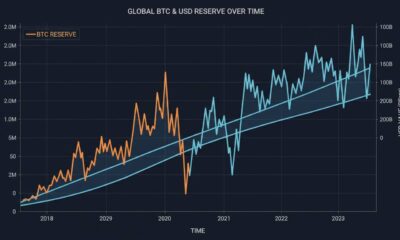
Gold's price increase signals a weakening of the dollar. I believe Bitcoin forecasts based on the dollar will underestimate Bitcoin's future price. This is not the prettiest chart, it looks like it was drawn with a shaky hand, but it shows what would happen if Bitcoin's "value"… pic.twitter.com/tYozBwoafa
— apsk32 (@apsk32) October 6, 2025
Why a $70,000 Bitcoin Rebound Matters After the March 9 Low
Bitcoin’s recovery is notable because it follows a deep reset rather than a straight-line breakout. CoinStats AI’s March 12, 2026 market note placed BTC near $70,216.54 after a rebound from roughly $66,370 on March 9. That left the asset still below the March 4 high near $73,328.52, but clearly off the month’s weakest levels. In historical context, that pattern points to stabilization rather than a confirmed trend reversal.
NEW: Josh Mandell comes out with another bold prediction, saying that Bitcoin’s price action from today onward will be “green after green.” 🟢🟢https://t.co/s8AicRT6lx
— Bitcoin News (@BitcoinNewsCom) March 15, 2025
The broader backdrop is important. CME Group’s March 2026 options commentary said Bitcoin had corrected about 50% between October 6, 2025 and February 6, 2026. That scale of drawdown matters because rebounds after large corrections tend to be judged less by spot price alone and more by whether leverage, options demand, and institutional flows improve at the same time. In this case, options traders were showing a call-to-put open interest ratio of about 3:1 for March expirations, with roughly $660 million in calls against $240 million in puts, according to CME Group. That does not guarantee upside, but it does show traders were paying for rebound exposure.
March 2026 Bitcoin Price Timeline
March 4, 2026: Bitcoin reached a monthly high near $73,328.52, according to CoinStats AI.
Gold up and Bitcoin Down as usual . Should be clear to all which is considered a store of value If Bitcoin had of been a store of value- then it would not have decoupled violently downward in the opposite direction of Gold on October 10th 2025
byu/Salt_Yak_3866 inbtc
March 9, 2026: BTC fell to about $66,370, marking the month’s key washout low in the same dataset.
March 12, 2026: Bitcoin recovered to about $70,216.54, showing a rebound of roughly 5.8% from the March 9 low.
March 25, 2026: Market focus shifted to whether the rebound could hold as inflation and Fed expectations drove cross-asset moves.
How a 55% Open Interest Reset Changed the Setup
One reason the rebound has drawn attention is that derivatives are no longer as stretched as they were in late 2025. Reporting tied to CoinGlass data said Bitcoin open interest had fallen to roughly $44 billion by mid-February 2026 from a peak above $94 billion in October 2025, a decline of about 55%. Separate March reporting also placed open interest around the low-$40 billion range, with one report citing $42.3 billion as the highest level since November 2025 and another noting the market had recently dipped below $50 billion.
February 02, 2026 @ 01:44 PM (UTC)
Current Price of #Bitcoin$BTC / $USD: 💵 $77,789.12$BTC / $EUR: 💶 €65,909.57$BTC / $GBP: 💷 £57,054.66$BTC / $XAU: 🥇 16.240 oz$BTC / $XAG: 🥈 928.394 oz pic.twitter.com/My60AWVccV— Bitcoin (@Bitcoin) February 2, 2026
That reset matters because it reduces the risk that a rally is being driven mainly by crowded leveraged longs. Funding rates also support that reading. March reports linked to CoinGlass showed open-interest-weighted funding briefly turning negative, including a cited reading of minus 0.0022% on an 8-hour basis around March 4. Negative or near-flat funding typically means traders are not aggressively chasing upside with leverage. By comparison, overheated phases often feature persistently positive funding and rapidly rising open interest.
In practical terms, Bitcoin’s rebound looks more durable when spot buyers and options demand lead the move while perpetual futures remain relatively restrained. That is not the same as saying the market is safe. It means the structure is cleaner than during prior peaks.
Bitcoin Derivatives Reset
| Indicator | March 2026 Reading | Why It Matters |
|---|---|---|
| Open interest | About $42B-$44B in cited reports | Far below the roughly $94B October 2025 peak |
| Funding rate | Briefly negative in early March | Shows limited speculative long crowding |
| CME options skew | About 3:1 calls to puts for March expiries | Signals demand for upside exposure |
Source: CoinGlass-linked market reports and CME Group commentary reviewed March 25, 2026.
Bitcoin vs Gold: What Is Driving the Divergence?
The Bitcoin-gold contrast is central to this story. Gold had been one of the strongest macro trades before slipping into a losing streak in March, according to market reports reviewed for this article. At the same time, Bitcoin started to recover from its early-March weakness. That divergence does not prove a direct one-for-one rotation, but it does show investors were reassessing which hedge or risk asset offered better near-term upside.
Gold and Bitcoin often respond differently to the same macro inputs. Gold tends to benefit when real yields fall, the dollar weakens, or geopolitical stress intensifies. Bitcoin can also react positively to looser liquidity conditions, but in practice it often trades more like a high-beta risk asset when ETF flows weaken or when macro volatility hits equities. That distinction showed up earlier in 2026, when reports tied Bitcoin weakness to ETF outflows and tariff-related macro pressure even as gold remained firm.
Now the setup has shifted. If gold’s pullback reflects profit-taking after an extended run while Bitcoin is rebounding from a deep correction, relative performance can change quickly. The key question is whether Bitcoin’s bounce is being confirmed by fresh spot demand rather than just short covering.
📊
Gold’s slide alone does not make Bitcoin a safe haven.
Public market reporting in 2026 still shows Bitcoin reacting strongly to ETF flows, equity sentiment, and policy expectations, which is different from gold’s traditional defensive role.
Three Data Triggers Could Decide the Next BTC USD Move
First, ETF flows remain critical. Market reporting citing SoSoValue data said U.S. spot Bitcoin ETFs had recorded substantial net outflows in early 2026, with one March report putting year-to-date outflows at about $2.6 billion. Even when Bitcoin rebounds, sustained upside usually becomes easier when ETF flows stabilize or turn positive.
Second, inflation and Fed expectations still shape both Bitcoin and gold. AP reported in January 2026 that the Congressional Budget Office expected the Federal Reserve to cut short-term rates in 2026, with the policy rate settling around 3.4% by the end of 2028. That longer easing narrative can support scarce assets, but the path matters more than the destination. Sticky inflation or higher Treasury yields can pressure both assets in the short term.
Third, traders are watching whether Bitcoin can reclaim and hold the early-March high near $73,300. If it does, the rebound starts to look more like a trend repair. If it fails and slips back toward the $66,000-$68,000 zone, the move may be remembered as a relief rally inside a broader consolidation range.
Frequently Asked Questions
Why is Bitcoin rebounding while gold is falling?
Bitcoin’s rebound in March 2026 follows a deep correction and a derivatives reset, while gold’s decline appears tied to profit-taking after a strong prior run. The divergence reflects different market structures: Bitcoin is more sensitive to ETF flows and leverage, while gold is more tied to yields, the dollar, and safe-haven demand.
What was Bitcoin’s key support area in March 2026?
Market data cited by CoinStats AI placed Bitcoin’s notable March low near $66,370 on March 9, 2026. That level matters because the rebound toward $70,200 developed from there, making the mid-$66,000 zone an important recent reference point for traders.
Is Bitcoin’s rebound being driven by leverage?
Available March 2026 reporting suggests leverage is not the main driver. CoinGlass-linked reports showed open interest far below the October 2025 peak and funding rates briefly negative in early March, which points to a less crowded setup than prior speculative rallies.
How important are spot Bitcoin ETF flows right now?
They remain one of the most important near-term signals. Reports citing SoSoValue data showed meaningful net outflows in early 2026, and those flows have repeatedly influenced Bitcoin’s short-term momentum. A stronger rebound usually becomes more credible when ETF demand improves.
Does gold’s losing streak mean Bitcoin is replacing gold?
No verified data supports that conclusion on its own. Gold and Bitcoin can diverge for short periods, but they still serve different roles in portfolios and react differently to macro shocks. Bitcoin remains more volatile and more dependent on market liquidity and institutional flow data.
Conclusion
Bitcoin’s March 2026 rebound stands out because it is happening after a major deleveraging phase, with options traders showing renewed upside interest and gold simultaneously losing momentum. The cleaner derivatives backdrop improves the quality of the move, but it does not remove risk. For BTC USD, the next decisive signals are ETF flow direction, inflation-driven rate expectations, and whether price can reclaim the low-$73,000 area without a fresh surge in leverage.
Disclaimer: This article is for informational purposes only and does not constitute financial or investment advice. Cryptocurrency investments carry significant risk, including the possibility of total loss. Always conduct your own research and consult a qualified financial advisor before making investment decisions.

Anthony Hill is a seasoned general expert with over 12 years of professional experience. Anthony specializes in content strategy, digital media, and audience engagement, bringing deep industry knowledge and practical insights to every piece of content.With credentials including Professional Journalist Certification and Bachelor's Degree in Communications, Anthony has established a reputation for delivering accurate, well-researched, and actionable information. Anthony's work has been featured in leading general publications and trusted by thousands of readers seeking reliable expertise.Anthony is committed to maintaining the highest standards of accuracy and transparency, ensuring all content is thoroughly fact-checked and based on credible sources and current industry best practices. Connect: Twitter | LinkedIn | Website