News
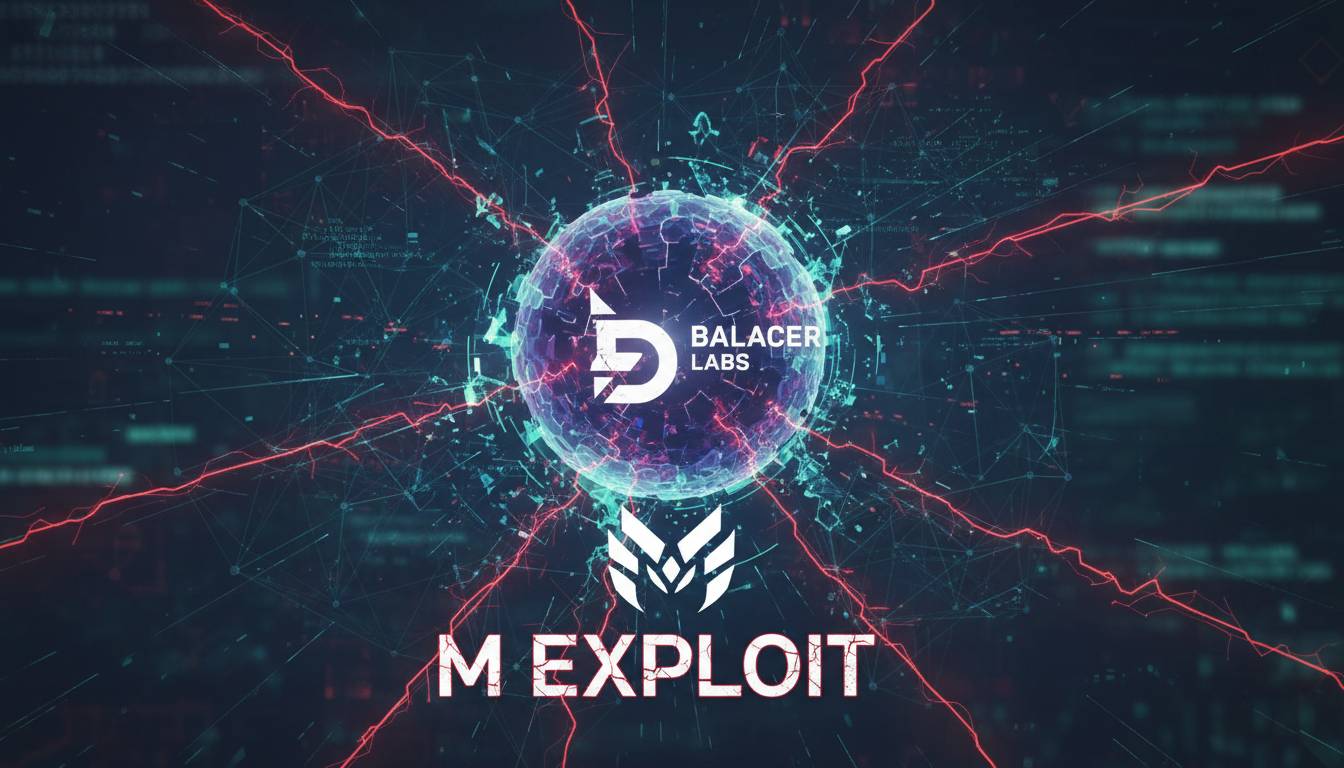
Balancer Labs to Shut Down After $128M Exploit: Next Steps
Balancer Labs to shut down after a $128M exploit as the protocol moves to V3. Learn what happens next, key changes ahead, and what users should watch closely.

Balancer’s crisis response after the roughly $128.6 million V2 exploit on November 3, 2025 is now reshaping the project’s operating model into 2026. The key facts are clear: V2 was the attack surface, V3 has remained the strategic focus, and Balancer governance has moved to disable older infrastructure, limit new V2 activity, and preserve withdrawal paths where support is being reduced, according to Balancer forum proposals, DefiLlama data, and reporting from The Block.
That makes the real story less about a literal protocol shutdown and more about a controlled retreat from legacy systems after one of DeFi’s largest exploits of 2025. Publicly available records reviewed for this article do not show an official Balancer Labs statement saying the entire protocol is shutting down. What they do show is a post-exploit transition: older factories are being disabled, some chain deployments are being deprecated, and Balancer V3 remains active in documentation and governance. For users, LPs, and governance participants, the practical question is what survives, what is being wound down, and what comes next.
🔴
The confirmed loss was about $128.6 million, centered on Balancer V2 and related forks.
PeckShield’s estimate was cited by The Block on November 3, 2025, while DefiLlama later showed Balancer’s combined TVL at $316.43 million when this article was prepared on March 24, 2026.
Balancer Post-Exploit Snapshot
| Metric | Value | Source |
|---|---|---|
| Exploit size | ~$128.6 million | The Block citing PeckShield, Nov. 3, 2025 |
| Protocol TVL | $316.43 million | DefiLlama, accessed Mar. 24, 2026 |
| Ethereum TVL share | $241.4 million | DefiLlama, accessed Mar. 24, 2026 |
| 30-day fees | $2.01 million | DefiLlama, accessed Mar. 24, 2026 |
| 30-day revenue | $768,523 | DefiLlama, accessed Mar. 24, 2026 |
Source: The Block, DefiLlama | Data accessed March 24, 2026
1/4 Balancer V2 Attack Analysis
Balancer V2 and its forks suffered a devastating attack across multiple chains, resulting in over $128M in losses. GoPlus detected and alerted users immediately. Here's what happened and how the attacker exploited a critical vulnerability. 🧵 pic.twitter.com/oZpOIKLD9Q
— GoPlus Security 🚦 (@GoPlusSecurity) November 3, 2025
November 3, 2025 Exploit Triggered the Strategic Reset
The exploit itself is well documented. The Block reported on November 3, 2025 that Balancer suffered coordinated outflows totaling about $128.6 million, citing blockchain security firm PeckShield. In the same coverage, Nansen researcher Nicolai Sondergaard said the losses affected Balancer V2 and various forks, while V3 appeared safe. That distinction matters because it frames the protocol’s response: contain V2 risk, keep V3 development intact, and reduce the footprint of older deployments.
Historical context reinforces the scale. Balancer had already dealt with vulnerability disclosures in earlier years, including a 2023 warning that led users to withdraw liquidity from affected pools. The 2025 event was materially larger. Third-party reporting and DefiLlama snapshots indicate Balancer had about $678 million in investor assets before the exploit, meaning the loss represented a major share of capital tied to the protocol at the time. By March 24, 2026, DefiLlama showed combined TVL at $316.43 million, with Ethereum still accounting for the majority at $241.4 million.
Balancer’s Post-Exploit Timeline
November 3, 2025: Balancer V2 exploit drains about $128.6 million across Balancer and related forks, according to The Block citing PeckShield.
Balancer Confirms $121M V2 Exploit; $45.7M Recovered, V3 Unaffected@Balancer has released its post-mortem on the Nov. 3 exploit, confirming $121.1M in losses from a rounding-error vulnerability affecting V2 Composable Stable Pools. Other V2 pool types and all Balancer V3 pools… pic.twitter.com/gru98AfJE0
— ME Group (@MetaEraHK) November 19, 2025
November 28, 2025: Balancer proposes distributing roughly $8 million in rescued assets, including funds recovered by white hats and internal rescue operations, according to The Block.
January 20, 2026: BIP-906 proposes deprecating support for Polygon zkEVM, Fraxtal, and Mode, while preserving withdrawal functionality where possible.
March 9, 2026: BIP-914 proposes disabling outdated Oracle LP Pool Factories across networks at Balancer Labs’ request.
Why March 2026 Governance Moves Point to Wind-Down, Not Full Closure
The strongest evidence for “what happens next” comes from Balancer governance, not headlines. In BIP-906, published January 20, 2026, the DAO proposed deprecating support for Polygon zkEVM, Fraxtal, and Mode. The proposal states that no new Balancer V2 pools can be created on any network under earlier governance measures, and that some chains would move to withdrawal-only or degraded support. That is a targeted reduction in operational scope, not a blanket shutdown.
Then came BIP-914 on March 9, 2026. That proposal asks the DAO multisig and Omnisig to disable outdated Oracle LP Pool Factories across all networks where they remain deployed. The motivation section explicitly says the action was requested by BLabs. In plain terms, Balancer is removing old infrastructure that no longer fits its security posture.
Separately, Balancer’s documentation site remains live and prominently features Balancer V3 docs, integration guides, deployment references, and developer tooling. That is inconsistent with a full protocol shutdown. It is consistent with a protocol narrowing support around newer architecture after a legacy-system exploit.
⚠️
No public primary source reviewed for this article says Balancer V3 is shutting down.
Balancer docs accessed on March 24, 2026 still present V3 as the active product line, while governance proposals focus on disabling outdated V1/V2-related infrastructure and reducing support on selected chains.
$8 Million Recovery Plan Shows How User Restitution Was Structured
One concrete next step after the exploit was restitution. The Block reported on November 28, 2025 that Balancer proposed distributing about $8 million in rescued assets to affected users. That pool included roughly $3.86 million recovered by six white hat actors during the incident, according to the same report. Relative to the total estimated loss of $128.6 million, that implied only partial recovery, but it established a formal process for allocating what could be saved.
The significance is twofold. First, it shows Balancer chose a governance-led recovery path rather than an ad hoc reimbursement promise. Second, it underlines the limits of post-hack recovery in DeFi: even with white hats, emergency actions, and chain-level interventions in some ecosystems, only a fraction of funds may be recoverable.
Legacy Retrenchment vs Active Balancer Components
| Area | Status | Evidence |
|---|---|---|
| Balancer V2 pool expansion | Restricted | BIP-906 says no new V2 pools can be created |
| Selected chain support | Being deprecated or reduced | BIP-906 for zkEVM, Fraxtal, Mode |
| Outdated oracle factories | Proposed for disablement | BIP-914, March 9, 2026 |
| Balancer V3 docs and tooling | Active | Balancer docs site, accessed Mar. 24, 2026 |
| Withdrawals on deprecated paths | Maintained where possible | BIP-906 specification |
Source: Balancer governance forum and docs | Accessed March 24, 2026
316.43M TVL Leaves Balancer Smaller, but Not Inactive
DefiLlama data accessed March 24, 2026 shows Balancer with $316.43 million in combined TVL, 457 tracked pools, $2.01 million in fees over 30 days, and $768,523 in 30-day revenue. Those figures place Balancer well below its earlier scale, but they also show the protocol still has measurable usage. Ethereum remains the center of gravity with $241.4 million in TVL, followed by smaller balances on Arbitrum, Base, and Gnosis.
That matters for interpreting the phrase “shut down.” A company can reduce staff, narrow product scope, or stop supporting legacy systems while the protocol itself continues to operate onchain. Based on the public record available as of March 24, 2026, Balancer’s trajectory looks like consolidation around safer and more maintainable components rather than a total disappearance from DeFi.
Frequently Asked Questions
Frequently Asked Questions
Did Balancer Labs officially announce a full shutdown?
Public sources reviewed for this article do not show an official statement that the entire Balancer protocol is shutting down. Instead, Balancer governance proposals in January and March 2026 show deprecations, disablements of outdated infrastructure, and reduced support for selected chains, while Balancer V3 documentation remains active as of March 24, 2026.
How large was the Balancer exploit?
The exploit was estimated at about $128.6 million on November 3, 2025, according to The Block’s reporting citing blockchain security firm PeckShield. The incident affected Balancer V2 and related forks, while Nansen analysis cited by The Block said V3 appeared safe at that time.
What happened to affected users after the hack?
Balancer proposed distributing roughly $8 million in rescued assets on November 28, 2025, according to The Block. That amount included funds recovered by white hat actors and internal rescue operations. It represented only partial recovery relative to the total estimated losses.
What parts of Balancer are being wound down?
Governance records show that no new Balancer V2 pools can be created under prior measures referenced in BIP-906, support is being deprecated or reduced on Polygon zkEVM, Fraxtal, and Mode, and outdated Oracle LP Pool Factories are being disabled under BIP-914. These are targeted legacy retrenchment steps.
Is Balancer V3 still active?
Yes, based on public documentation accessed March 24, 2026. Balancer’s docs site continues to host Balancer V3 documentation, integration guides, deployment references, and developer resources. No primary source reviewed here states that V3 is being shut down.
Disclaimer: This article is for informational purposes only. DeFi protocols carry significant risks including smart contract vulnerabilities and potential total loss of funds. Always verify protocol updates independently, review governance proposals directly, and never commit capital you cannot afford to lose.

James Morgan is a seasoned general expert with over 8 years of professional experience. James specializes in content strategy, digital media, and audience engagement, bringing deep industry knowledge and practical insights to every piece of content.With credentials including Professional Journalist Certification and Bachelor's Degree in Communications, James has established a reputation for delivering accurate, well-researched, and actionable information. James's work has been featured in leading general publications and trusted by thousands of readers seeking reliable expertise.James is committed to maintaining the highest standards of accuracy and transparency, ensuring all content is thoroughly fact-checked and based on credible sources and current industry best practices. Connect: Twitter | LinkedIn | Website