News
CFTC Chief Launches Crypto Derivatives Innovation Task Force
CFTC Chief launches an innovation task force targeting the crypto derivatives framework, signaling regulatory shifts and market impact. Read more ✓

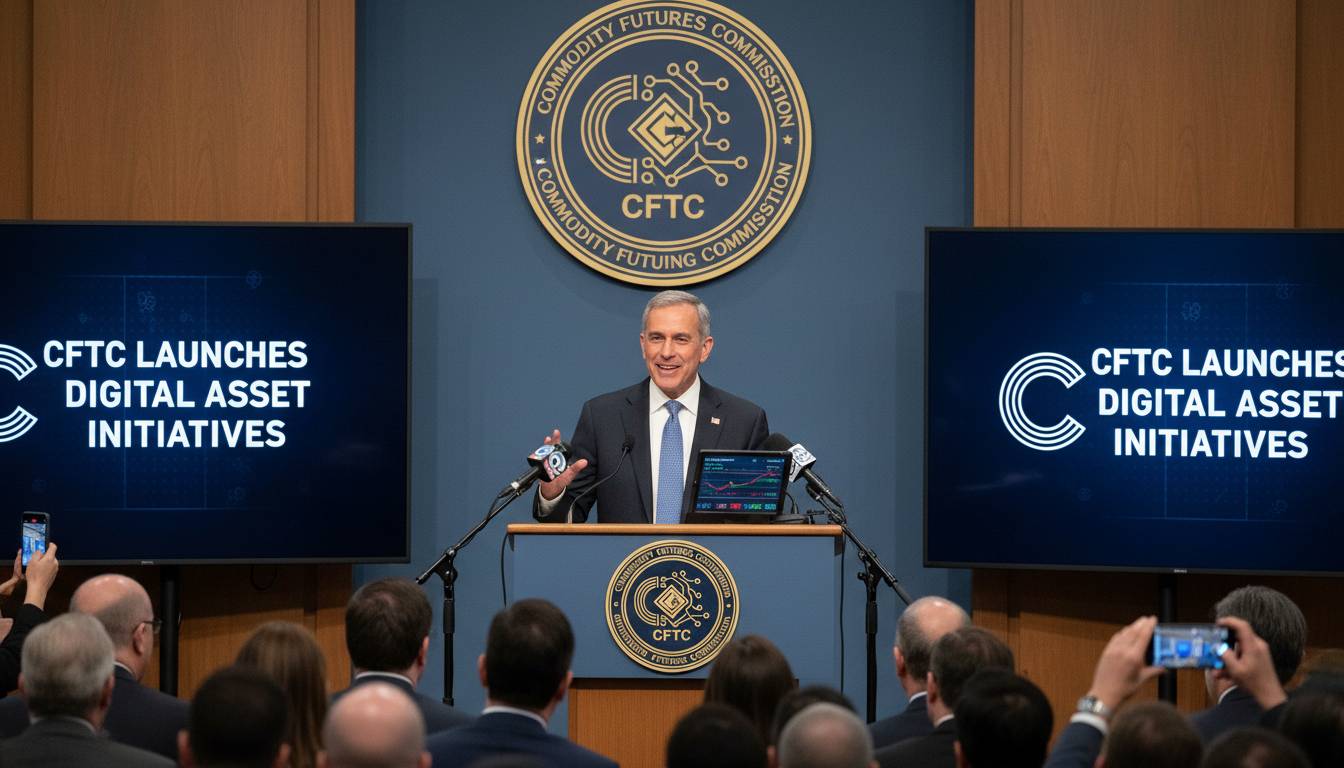
The Commodity Futures Trading Commission is expanding its crypto rulemaking push after Chairman Michael S. Selig launched the agency’s Innovation Advisory Committee on January 12, 2026, and populated it with senior executives from Coinbase, Uniswap Labs, BitGo, Cboe and other market firms on February 12, 2026. The move matters because the committee is designed to help the CFTC build a clearer framework for emerging derivatives products, including crypto-linked perpetual contracts, tokenized collateral and 24/7 market infrastructure, according to CFTC releases and speeches published between January 12 and March 12, 2026.
💡
The CFTC’s new innovation body is not a generic advisory panel.
It was launched on January 12, 2026, renamed from the former Technology Advisory Committee, and is explicitly tasked with advising on innovation in financial services, derivatives and commodity markets, according to the CFTC. Members announced on February 12, 2026 include executives from Coinbase, Uniswap Labs, BitGo, Cboe and Polymarket.
January 12, 2026 launch puts derivatives design at the center
Chairman Selig formally launched the Innovation Advisory Committee, or IAC, on January 12, 2026, describing it as a vehicle to gather recommendations on innovation in financial markets. The committee replaced the CFTC’s former Technology Advisory Committee, a structural change that signals a broader mandate than pure technical oversight. In the agency’s own description, the IAC is meant to advise on the impact and use of new technologies across financial services, derivatives and commodity markets.
That timing is important. Selig had been sworn in as the CFTC’s 16th chairman on December 22, 2025, less than three weeks earlier. In that swearing-in statement, he said Congress was poised to send digital asset market structure legislation to the president’s desk and framed the CFTC as the agency best positioned to write “commonsense rules of the road” for new financial markets.
The committee’s remit lines up with that agenda. In a January 29, 2026 speech titled The Next Phase of Project Crypto, Selig said the CFTC was partnering with the SEC on a coordinated federal approach to crypto oversight rather than running a separate initiative. That speech tied the CFTC’s innovation work directly to harmonized market structure, a notable point for firms listing or clearing crypto derivatives that may otherwise face overlapping federal regimes.
CFTC Innovation Push: Key Dates and Actions
| Date | Action | Why It Matters |
|---|---|---|
| April 21, 2025 | CFTC staff request comment on perpetual derivatives | Opened formal record on risks and uses of perpetual contracts |
| August 1, 2025 | Pham launches CFTC “crypto sprint” | Set policy track for 24/7 trading, perpetuals and digital asset reforms |
| January 12, 2026 | Selig launches Innovation Advisory Committee | Creates standing body to advise on innovation in derivatives markets |
| February 12, 2026 | CFTC announces IAC members | Adds crypto, exchange and clearing executives to committee roster |
| March 12, 2026 | CFTC opens ANPR on prediction markets | Shows broader rulemaking push on novel derivatives contracts |
Source: CFTC press releases and speeches | accessed March 25, 2026
🇺🇸 The SEC and CFTC Chairs Atkins and Selig launched "Project Crypto," this week.
📜 The joint initiative to harmonize crypto regulation and prepare for imminent bipartisan market structure legislation under President Trump's administration. https://t.co/g7TXlJrcTh pic.twitter.com/aUDWWb8EA5
— Bitcoin.com News (@BitcoinNews) February 1, 2026
35-member roster shows where the CFTC wants market input
When the CFTC published the IAC membership on February 12, 2026, the list offered a clearer signal than the launch announcement alone. The committee includes Hayden Adams of Uniswap Labs, Brian Armstrong of Coinbase, Mike Belshe of BitGo, Craig Donohue of Cboe Global Markets, Andrej Bolkovic of Options Clearing Corporation, Thomas Chippas of Rothera Markets and Shayne Coplan of Polymarket, among others. That mix spans spot crypto, derivatives venues, custody, clearing and prediction markets.
For a derivatives framework story, that composition is the data point that matters most. It suggests the CFTC is not limiting consultation to traditional futures exchanges or legacy intermediaries. It is also drawing from firms active in decentralized finance, tokenized infrastructure and event-based markets. Compared with older CFTC advisory structures, this roster is more explicitly aligned with crypto-native and hybrid market models.
The committee also arrives after earlier crypto-specific work under former Acting Chairman Caroline Pham. In 2025, the agency sought public comment on perpetual derivatives, launched a crypto sprint, and opened initiatives on tokenized collateral and stablecoins in derivatives markets. That sequence matters because the IAC does not start from zero; it sits on top of an existing policy record built over the prior year.
How the CFTC’s crypto derivatives agenda developed
April 21, 2025: CFTC staff sought public comment on perpetual contracts, asking about trading, clearing, risk management, market integrity and retail protection.
SEC Declares 18 Crypto Assets As Digital Commodities, Not Securities
byu/ourcryptotalk inCryptoCurrency
September 23, 2025: Pham launched a tokenized collateral and stablecoins initiative for derivatives markets.
December 8, 2025: The CFTC announced a digital assets pilot program covering BTC, ETH and USDC as collateral in certain derivatives settings.
January 12, 2026: Selig launched the Innovation Advisory Committee.
February 12, 2026: The agency named committee members from crypto, exchange and clearing firms.
Why perpetuals, tokenized collateral and 24/7 trading are driving the framework
The strongest evidence that the task force is targeting crypto derivatives framework issues comes from the CFTC’s own policy trail. In April 2025, staff asked for public comment on perpetual derivatives, a product structure that dominates offshore crypto trading but has had limited regulated U.S. treatment. The request specifically asked about market integrity, customer protection, retail trading and clearing implications.
By August 1, 2025, the agency said it had completed public comment periods on both 24/7 trading and perpetual derivatives as part of its crypto sprint. That placed two core crypto-market mechanics into the CFTC’s formal review pipeline months before Selig took office.
Tokenized collateral became the next major leg. On September 23, 2025, Pham launched an initiative focused on tokenized collateral, including stablecoins, in derivatives markets. On December 8, 2025, the CFTC expanded that work into a pilot program covering certain digital assets including BTC, ETH and USDC as collateral, while also issuing guidance intended to provide regulatory clarity.
Framework Areas the CFTC Has Already Put on Record
| Topic | Documented CFTC Action | Latest Confirmed Date |
|---|---|---|
| Perpetual derivatives | Request for comment on uses, benefits and risks | April 21, 2025 |
| 24/7 trading | Public comment period completed under crypto sprint | August 1, 2025 |
| Tokenized collateral | Initiative launched for derivatives markets | September 23, 2025 |
| BTC, ETH, USDC collateral pilot | Digital assets pilot program announced | December 8, 2025 |
| Prediction market rulemaking | Advanced notice of proposed rulemaking issued | March 12, 2026 |
Source: CFTC | accessed March 25, 2026
March 2026 filings show the committee fits a wider rulemaking cycle
The IAC launch is not an isolated headline. On March 12, 2026, the CFTC published an advanced notice of proposed rulemaking on event contracts traded on prediction markets. While prediction markets are distinct from crypto perpetuals, the move shows the agency is actively revisiting how novel derivatives products fit within the Commodity Exchange Act.
Separately, Bloomberg Law reported on March 3, 2026 that Selig said the agency would create a framework for crypto-linked perpetual futures, contracts that allow leveraged exposure without expiration. That report aligns with the CFTC’s earlier request for comment and with the committee’s derivatives-heavy membership. Because the CFTC has not yet published a standalone March press release announcing a final perpetuals rule, the most supportable reading is that the framework is under development rather than complete.
ℹ️
What is verified as of March 25, 2026:
The CFTC has launched the Innovation Advisory Committee, named its members, opened prior comment processes on perpetuals and 24/7 trading, and advanced separate rulemaking on event contracts. A final published crypto derivatives framework has not yet been identified in CFTC primary-source releases reviewed for this article.
Frequently Asked Questions
What exactly did the CFTC launch?
The CFTC launched the Innovation Advisory Committee on January 12, 2026. It replaced the former Technology Advisory Committee and is designed to advise the Commission on technological innovation in financial services, derivatives and commodity markets, according to the agency’s launch notice and committee page.
Is this committee specifically about crypto derivatives?
Not exclusively, but crypto derivatives are clearly part of the agenda. The CFTC’s recent record includes comment requests on perpetual derivatives, initiatives on tokenized collateral and stablecoins, and a digital assets collateral pilot involving BTC, ETH and USDC, all published between April and December 2025.
Who sits on the committee?
As announced on February 12, 2026, members include executives from Coinbase, Uniswap Labs, BitGo, Cboe Global Markets, Options Clearing Corporation, Rothera Markets and Polymarket, among others. That mix gives the committee input from exchanges, custody firms, DeFi and clearing infrastructure.
Has the CFTC finalized a crypto perpetual futures framework?
Publicly available materials reviewed for this article show the framework is still being developed. The CFTC requested comment on perpetual derivatives in April 2025, and Bloomberg Law reported on March 3, 2026 that Chairman Selig said a framework would be created, but no final CFTC rule text was identified here.
Why does this matter for U.S. crypto markets?
It matters because perpetuals, tokenized collateral and round-the-clock trading are core features of global crypto markets. If the CFTC builds a workable U.S. framework, more activity that now sits offshore or in legal gray areas could migrate into regulated domestic venues, subject to federal oversight and clearing standards.
Disclaimer: This article is for informational purposes only and does not constitute legal or compliance advice. Cryptocurrency regulations vary by jurisdiction. Always consult with a qualified legal professional regarding regulatory matters.

Debra Phillips is a seasoned general expert with over 13 years of professional experience. Debra specializes in content strategy, digital media, and audience engagement, bringing deep industry knowledge and practical insights to every piece of content.With credentials including Professional Journalist Certification and Bachelor's Degree in Communications, Debra has established a reputation for delivering accurate, well-researched, and actionable information. Debra's work has been featured in leading general publications and trusted by thousands of readers seeking reliable expertise.Debra is committed to maintaining the highest standards of accuracy and transparency, ensuring all content is thoroughly fact-checked and based on credible sources and current industry best practices. Connect: Twitter | LinkedIn | Website