News
Cardano News: ADA Updates and Community Insights

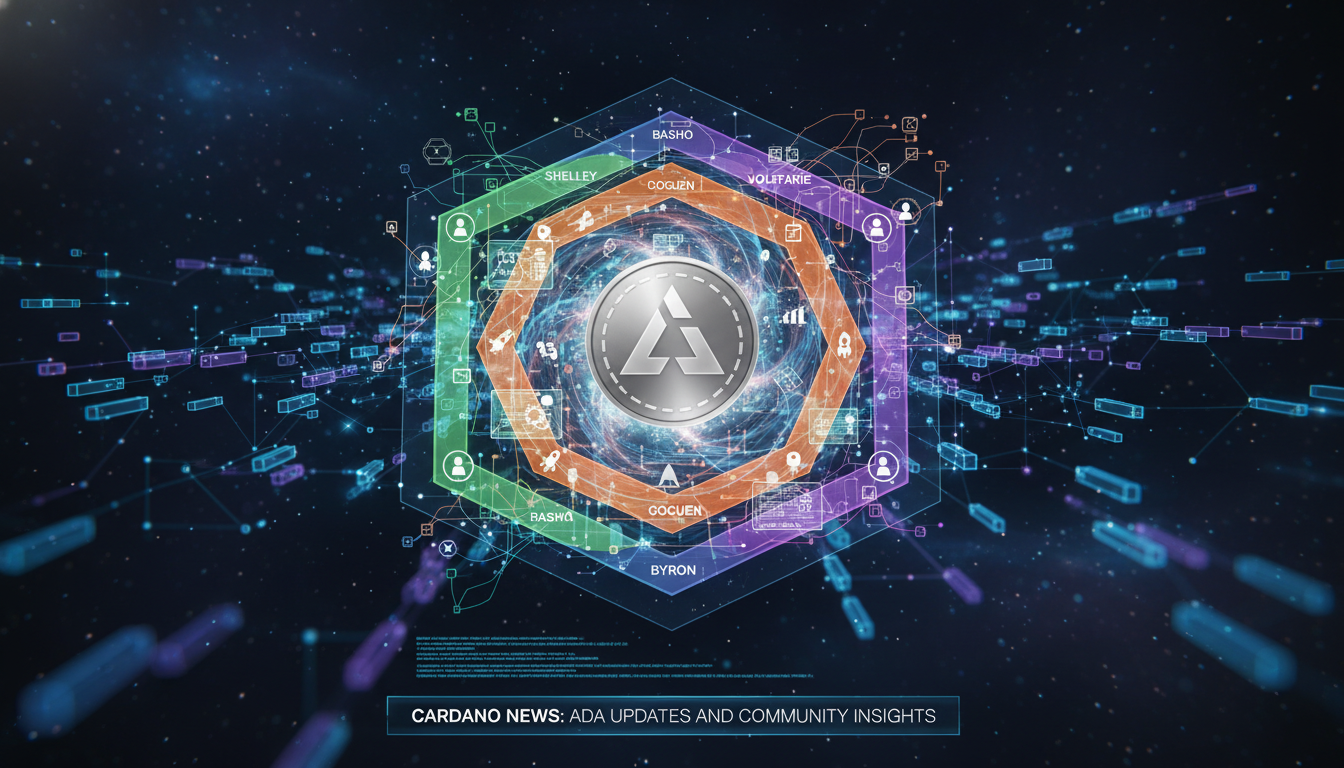
The Cardano ecosystem is thriving with fresh updates in early 2026—launching improved infrastructure, deeper decentralization, and vibrant community activity. This update covers the latest technical developments, governance shifts, and real-world integration shaping Cardano right now.
Governance Evolution and Community Momentum
Cardano’s decentralized governance continues to gain ground. On January 22, 2026, a revamped Cardano Constitution was ratified with strong backing from active voting stakeholders, introducing stricter rules like immutable off-chain links and eliminating budget info actions . Parallel to that, a strategic “Cardano 2030 Vision” framework was ratified on January 21, setting a shared roadmap built through community collaboration .
In early 2026, the community-funded Critical Integrations budget moved into action. This 70 million ADA allocation supports vital tools like the Pyth Oracle, Dune Analytics, and a tier-one stablecoin to enhance Cardano’s ecosystem utility . On February 2, updates showed even more movement: the Foundation expanded delegation to 360 million ADA in community hands, further decentralizing governance .
Why this matters:
- The constitutional updates enhance governance clarity and accountability.
- The 2030 vision provides a shared long-term strategic compass for the ecosystem.
- Community control of ADA strengthens decentralization and democratic participation.
- Infrastructure investments show real commitment to an evolving, functional ecosystem.
Tech Advancements: Roadmaps in Motion
Leios and Scalability
Ouroboros Leios, the next-gen consensus protocol, is making significant progress. Reddit discussions reveal that CIP‑0164 was finalized on January 6, 2026, setting the blueprint for Leios’s innovative two-tier block structure that could lift TPS from 10–20 to 300–1,000—or more under optimized conditions . This is a leap in ambition and technical capacity for Cardano.
In mid‑2025, Input Output Global (IOG) reiterated that Leios, originally planned for a 2028 launch, is now aimed for deployment in 2026—a timeline accelerated by ecosystem priorities .
Other Technical Highlights
The January 23, 2026 development report confirmed completion of nested transactions (CIP‑118 design) and initiated work on account address enhancements (CIP‑159) for the Dijkstra era . Meanwhile, engineering teams progressed on Mithril’s SNARK‑friendly libraries and DMQ deployment infrastructure .
Ecosystem Integrations and Developer Engagement
Tooling, Events, and Real-Time Data
Projects are being realized: Circle and Pentad rolled out USDCx integration, leveraging the Critical Infrastructure funding . Mesh and SIDAN Lab launched CGOV, a platform for on-chain governance participation . Developer tools are also improving—Cardanoscan’s Python SDK was released to ease blockchain data access .
Upcoming events include Buidler Fest #3 in March 2026, following an open call for speakers—to fuel collaboration and showcase innovation in Buenos Aires .
AI, Analytics, and Real-Time Insights with Logan
Charles Hoskinson unveiled a major Logan AI update (v2026.2.5), which integrates new tools like TapTools, Cexplorer, Ada Handle, CSWAP, Ada Anvil, Metera, GovCircle, and NABU VPN . Logan now interacts with real-time Cardano data and services—making it a potent ecosystem intelligence engine.
Nicolas Cerny, Governance Lead, highlighted the strategic opportunity in decentralized finance (DeFi) and real-world asset (RWA) tokenization. Given Cardano’s security strengths, Cerny sees it as a strong foundation for tokenizing assets like bonds .
Community Resilience and Impact
Cardano weathered a chain partition incident in November 2025 with grace. The Ouroboros protocol resolved the split within 14 hours without any downtime, demonstrating the network’s inherent resilience .
The Q4 2025 report further underscored the momentum: the Cardano Summit brought global engagement, the ecosystem held strong during the incident, and decentralized, on-chain governance became the norm .
Summary
To sum up, Cardano in early 2026 is entering a pivotal phase:
– Governance and constitution are more robust and decentralized.
– Leios is moving fast, with real potential for scalable TPS breakthroughs.
– Key integrations and tools are launching, improving utility and developer usability.
– Logan AI accelerates ecosystem intelligence.
– The network is resilient, adaptive, and primed for real-world applications and DeFi expansion.
This is a turning point. Cardano is stepping into a year defined by infrastructure growth, governance maturity, and real-world impact.
FAQs
What is the Leios upgrade and why is it important?
Leios is a new consensus design that splits transaction intake and ordering into parallel processes using a two-tier block system. It could lift Cardano’s transactions per second dramatically, supporting more use cases.
What governs Cardano’s decisions now?
A ratified, updated constitution enforces governance guardrails like immutable proposals and no “budget info actions.” Alongside, the Cardano 2030 Vision gives strategic direction rooted in community input.
Which integrations are funded by the Critical Infrastructure Budget?
Initiatives include integration of Pyth Oracle, Dune Analytics, a tier‑one stablecoin, and USDCx—designed to enrich Cardano’s application layer and DeFi infrastructure.
What does the Logan AI update enable?
Logan now connects with tools like Cexplorer and CSWAP for real-time blockchain insight—boosting its role as a content and analytics engine for the ecosystem.
How did Cardano handle the November network incident?
A malformed transaction caused a temporary fork, but Ouroboros guided recovery. Block production never halted, and normal operations resumed within 14 hours, showing the protocol’s resilience.
What upcoming events should Cardano stakeholders watch?
Buidler Fest #3 in Buenos Aires is a major gathering for builders and devs. Meanwhile, rollout of critical integrations and continued governance actions remain in motion.
The momentum is real, and Cardano stands at a crossroads of innovation, stability, and community-driven progress.